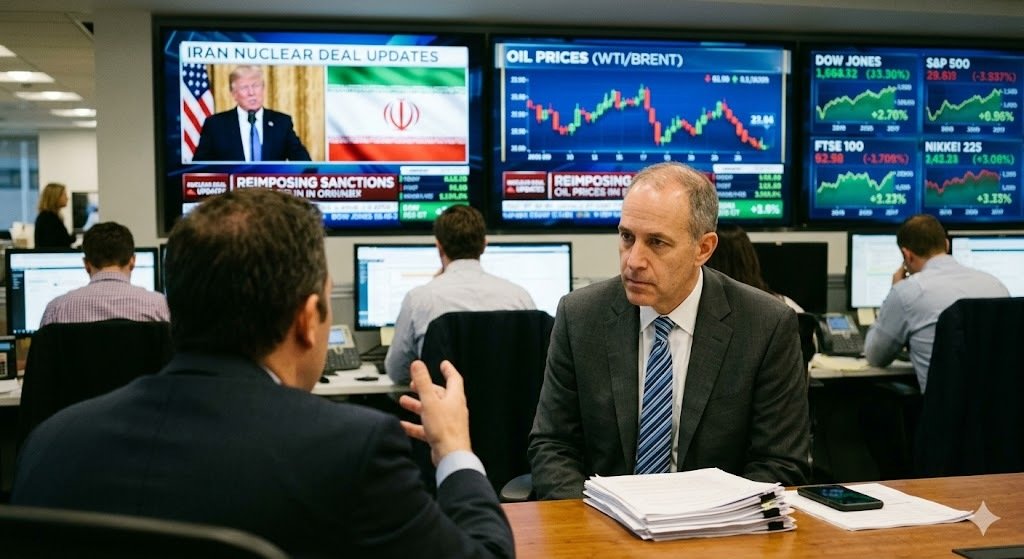
Markets are whipsawing between hope and anxiety as the world waits for Tehran’s formal response to Washington’s peace proposal. Here is everything you need to know, updated in real time.
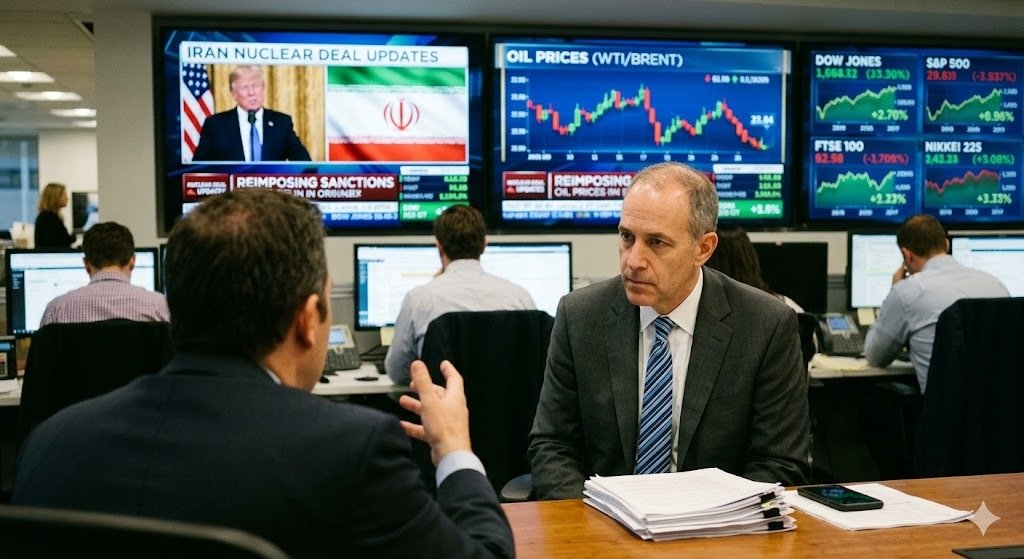
Oil prices edged lower on Thursday as the US waited for Iran’s response to the peace proposal. Brent crude futures fell to close at $100.06 a barrel while WTI settled at $94.81 per barrel.However, late on Thursday, oil prices climbed in extended trading with WTI gaining 2% after the US and Iran exchanged fire in the Strait of Hormuz, with each side claiming the other struck first. US Central Command said that military forces “intercepted unprovoked Iranian attacks and responded with self-defense strikes” as a trio of US Navy destroyers transited the waterway.
LATEST DEVELOPMENTS
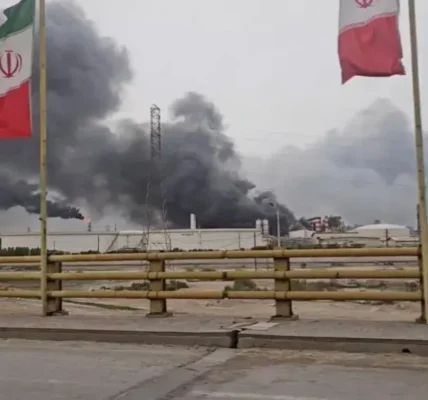
🔴 Explosions Reported Near Iranian Port City
A rally that drove stocks to record highs faltered and oil whipsawed as doubts resurfaced about an imminent US-Iran deal. US crude settled near $95 after briefly dropping below $90. Prices climbed in late hours on a news report that sounds of several explosions were heard near a port city in southern Iran. Iran’s state TV also said the US military attacked an Iranian oil tanker and was hit back by missiles.
🔴 Iran Rejects US “Unrealistic Plan” on Hormuz
The moves on Thursday came after a senior Iranian official said that the country would not allow the US to reopen the Strait of Hormuz passageway with an “unrealistic plan.” The official added that Iran would not let the US leave the conflict without paying reparations for the damage it has inflicted.
🟡 Iran’s Formal Response Still Awaited
Iran is said to be evaluating the US proposal to end the near-10-week war. Washington reportedly sent a memo to Tehran that would set a framework for peace negotiations, with terms that reportedly include a reopening of the Strait of Hormuz by both sides. Iran’s response had been expected Thursday it has not yet been formally delivered.
📈 WALL STREET THURSDAY CLOSE & FRIDAY PRE-MARKET
Thursday Close:
US stocks retreated from record highs on Thursday as investors watched for Iran’s response. The S&P 500 declined almost 0.4% to close at 7,337.11. The Nasdaq Composite slipped 0.13% to end at 25,806.20. The Dow Jones Industrial Average shed 313.62 points, or 0.63%, settling at 49,596.97.
Friday Pre-Market (as of early morning):
US stock futures rose early Friday as traders eyed developments between the US and Iran. S&P 500 futures and Nasdaq 100 futures were up about 0.17% and 0.25%, respectively. Futures tied to the Dow Jones Industrial Average rose 62 points, or about 0.12%.
Wednesday’s Record-Breaking Rally (for context):
On Wednesday, the S&P 500 advanced 1.46% to 7,365.12 — a new record close — while the Nasdaq Composite gained 2.02% to end at 25,838.94. The Dow Jones surged 612.34 points, or 1.24%, to close at 49,910.59.
ASIAN MARKETS THURSDAY SESSION
Japan stocks rose more than 5% on Thursday, with the benchmark Nikkei 225 hitting 62,000 for the first time. The Nikkei 225 advanced over 5% to end at 62,833.84, led by gains in basic materials, technology, and financial stocks. Shares of index heavyweight SoftBank surged more than 18%, while semiconductor company Sumco Corp surged 19.74%.
In Australia, the S&P/ASX 200 rose 0.96% to 8,878.1. South Korea’s Kospi jumped 1.43% to 7,490.05. Hong Kong’s Hang Seng index jumped 1.57% while mainland China’s CSI 300 edged 0.48% higher.
THE HORMUZ SUPPLY CRUNCH — BY THE NUMBERS
With traffic at a standstill, the market is losing upward of 13 million barrels’ worth of oil supply per day, according to JPMorgan analysts.
The Trump administration said roughly 23,000 seafarers across vessels from 87 countries have been stranded in the Persian Gulf following Iran’s effective shutdown of the strait. Warren Patterson, head of commodities strategy at Dutch bank ING, said: “Roughly 13 mb/d of disrupted supply is being largely offset by inventory, which is clearly declining rapidly. This leaves the market more vulnerable with each passing day. Tighter stocks will only leave the oil market trading in an ever more volatile manner.”
EARNINGS SEASON THE OTHER STORY MARKETS ARE WATCHING
Despite the geopolitical fog, corporate America is delivering. Stocks have been boosted higher in recent sessions by a strong earnings season, with all three major averages expected to end the week higher. Strong tech earnings have put the Nasdaq on pace to climb 2.8% on the week. The S&P 500 is on track for a rise of 1.5%.
Among standout performers this week: AMD jumped 13% after strong guidance. Super Micro Computer surged 18%. Apple touched an all-time intraday high of $290.33.
Datadog raised its full-year revenue outlook to between $4.3 billion and $4.34 billion, above analyst expectations of $4.09 billion, citing AI as a leading growth driver. The company reported earnings of $0.60 per share on quarterly revenue of roughly $1 billion, which grew 32% year over year.
On the downside, Expedia shed 8% after its second-quarter revenue guidance disappointed, while CoreWeave slid about 10% as its revenue outlook also fell short of Wall Street expectations.
US LABOUR MARKET DATA WATCH
Initial jobless claims rose to 200,000 in the week ended May 2, coming in above the previous week’s revised tally of 190,000. The four-week moving average of initial claims fell to 203,250. Continuing claims ticked down to 1.76 million.
Investors will now look ahead to Friday’s release of April’s unemployment rate and payrolls data. Economists are expecting job gains of just 55,000 last month — a dramatically weak figure that would reflect the economic drag of the ongoing conflict and energy shock.
EARNINGS OUTLOOK ANALYSTS STAY BULLISH DESPITE EVERYTHING
PNC Asset Management chief investment strategist Yung-Yu Ma said: “It is important to note that the gains are very broad based. If you look out to Q2, Q3 and Q4, the market and analysts are still expecting about 20% or higher earnings growth on a year-over-year basis. The momentum is going to be quite strong.”
KEY RISKS TO WATCH TODAY FRIDAY, MAY 8
1. Iran’s Formal Response to the MOU The single biggest market-moving event of the day. Any signal of acceptance will send Brent sharply lower; rejection or silence will reverse Thursday’s overnight oil gains.
2. April US Jobs Report With economists forecasting just 55,000 new jobs, a miss could pressure the Fed and reignite recession fears.
3. Strait of Hormuz Incidents Overnight clashes between US naval forces and Iranian units demonstrate how quickly the situation can escalate. A single significant military incident could send oil back toward $120.
4. Trump’s Next Statement Markets have proven extremely sensitive to every Truth Social post and press comment from the President. Expect volatility around any White House briefing.
THE WEEK IN REVIEW WHERE MARKETS STAND
Despite Thursday’s retreat, strong earnings momentum has kept weekly gains intact. The Nasdaq is on pace for a weekly rise of 2.8%, the S&P 500 is up 1.5% for the week, while the Dow Jones has lagged with a week-to-date gain of about 0.2%. Even with oil’s two-day drop, Brent crude is still up more than 65% since the start of the year.
🔴 Bottom Line for Friday: Markets open cautiously optimistic but fundamentally in a holding pattern. The Iran deal is alive but so is the conflict. Every headline out of Tehran, Washington, and the Strait of Hormuz will move prices. Today’s jobs data adds a second major variable. Stay close to the screen.