A Psychological Barrier Broken
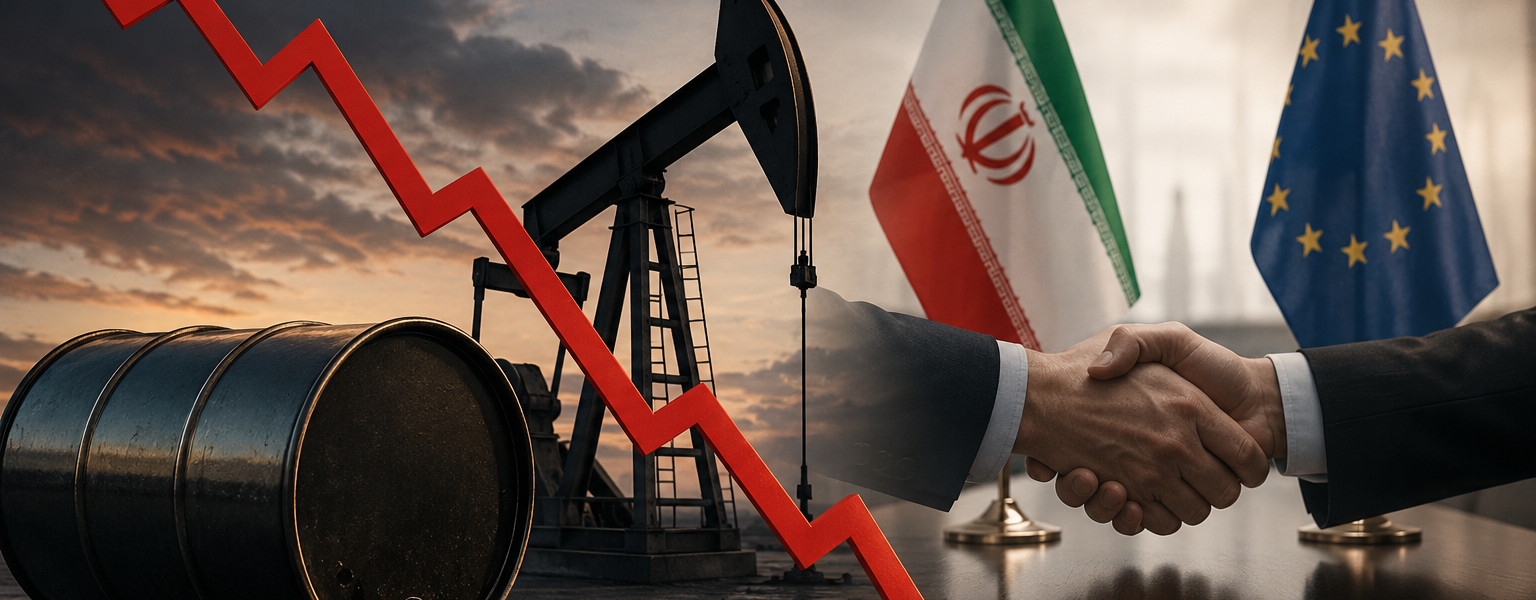
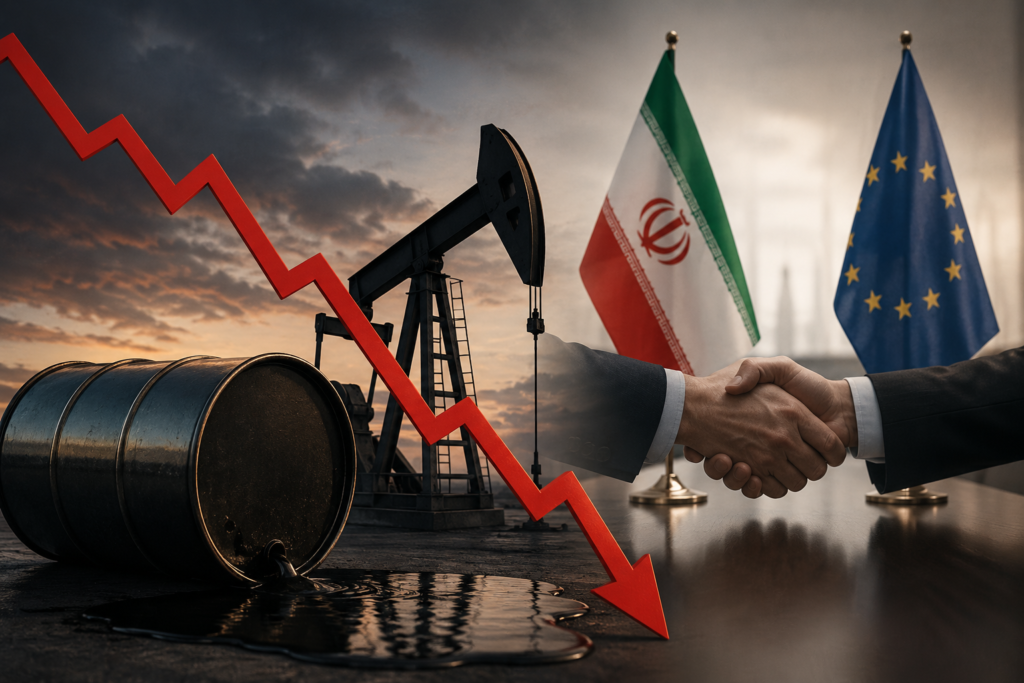
For the first time since the US-Iran war began on February 28, 2026, global oil markets have witnessed a watershed moment. Oil prices briefly dropped below $100 a barrel following reports that the US and Iran were closing in on a memorandum of understanding to end their war, and Tehran indicated the Strait of Hormuz could reopen.
International benchmark Brent crude futures for July fell 1.85% to $99.40 a barrel, while US West Texas Intermediate futures for June rose 1.85% to $93.21 per barrel a split that reflects the volatile, moment-by-moment sensitivity of markets to every twist in the diplomatic drama unfolding in Islamabad and Washington.
Crude was trading at about $70 a barrel before the war began on February 28, but had reached highs of $126 last week. The fall below the $100 threshold is therefore as much symbolic as economic a signal from markets that they believe an endgame is finally within reach.
The Memorandum of Understanding: What We Know
The driving force behind Thursday’s oil price drop is a single document being feverishly negotiated in back channels between Washington and Tehran.
The White House believes it is getting close to an agreement with Iran on a one-page memorandum of understanding to end the war and set a framework for more detailed nuclear negotiations. In its current form, the MOU would declare an end to the war in the region and the start of a 30-day period of negotiations on a detailed agreement to open the strait, limit Iran’s nuclear program, and lift US sanctions.
The deal would involve Iran committing to a moratorium on nuclear enrichment, the US agreeing to lift its sanctions and release billions in frozen Iranian funds, and both sides lifting restrictions around transit through the Strait of Hormuz. Many of the terms laid out in the memo would be contingent on a final agreement being reached, leaving the possibility of renewed war or an extended limbo in which the hot war has stopped but nothing is truly resolved.
Iran is expected to give mediators its formal reply to the proposal on Thursday. The document would also include discussion of a moratorium on uranium enrichment for a period of longer than 10 years, and would require Iran to ship its stockpile of highly enriched uranium out of the country though details remain under negotiation.
Pakistan: The Quiet Broker at the Centre
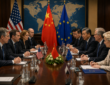
The one-page, 14-point MOU is being negotiated between Trump’s envoys Steve Witkoff and Jared Kushner and several Iranian officials, both directly and through mediators.
Pakistan has emerged as the indispensable diplomatic bridge. A Pakistani official said Thursday that Islamabad remained hopeful that a deal between the US and Iran would happen soon. “If an agreement is reached in Pakistan, it would be an honour for us,” said Tahir Andrabi, a spokesman for Pakistan’s Foreign Ministry.
Pakistani Prime Minister Shehbaz Sharif named Saudi Arabia’s Crown Prince Mohammed bin Salman as a key partner who prodded Trump to suspend the military mission in the waterway, writing on social media that Pakistan was “very hopeful that the current momentum will lead to a lasting agreement that secures durable peace and stability for the region and beyond.”
The Strait of Hormuz: Why It Matters So Much
The importance of the Strait of Hormuz to global energy markets simply cannot be overstated. Around a fifth of the world’s oil or 20 million barrels a day usually passes through the strait. Its virtual closure during the conflict has sent oil prices soaring and stranded about 20,000 seafarers, according to the International Maritime Organization.
The Strait of Hormuz has been effectively closed since the US and Israel launched their attack on Iran on February 28, disrupting global energy supplies and pushing up fuel prices. Iran has attacked commercial ships that try to transit the strait without its approval. The US has imposed its naval blockade since April 13, and US Central Command said that, as of Wednesday, its blockade had turned around 52 vessels.
A Shift in Washington’s Position?
Perhaps the most significant development this week is what appears to be a quiet but consequential retreat by the United States from its original war objectives.
US Secretary of State Marco Rubio declared that Operation Epic Fury, the air and naval campaign launched on February 28, was “concluded.” What Washington now sought, he said, was a “memorandum of understanding for future negotiations” which is precisely what Iran has been demanding for weeks.
Analysts have noted the significance of this shift. Andreas Krieg, associate professor at King’s College London’s School of Security Studies, described it as a limited but meaningful concession, saying “Washington has accepted that the simultaneous resolution of the war, Hormuz, and the nuclear file in one final package is not currently feasible.”
Meanwhile, France moved its nuclear-powered aircraft carrier Charles de Gaulle to the Red Sea, with French President Emmanuel Macron stating: “All parties must lift the blockade of the Strait, without delay and without conditions. We must return, on a lasting basis, to the regime of full freedom of navigation that prevailed prior to the conflict.”
Markets React But Experts Urge Caution
The oil market’s response has been swift, but seasoned analysts are wary of premature optimism.
Vijay Valecha, Chief Investment Officer at brokerage Century Financial, warned: “The blockade on Iranian oil exports remains, and ship traffic through the strait is still constrained. This indicates there is no meaningful change in the ongoing supply disruption, and oil prices are lower mostly on positive sentiment around possible de-escalation.”
He added that supply recovery is inherently delayed, noting that inventories fell 8.1 million barrels last week which would be the biggest draw since mid-February.
Citi US equity strategist Scott Chronert told CNBC: “The duration of the conflict and the implication that has for higher oil prices for longer is a big deal as it pertains to future growth expectations for many parts of the market, as well as how it influences the Fed thinking in terms of the interest rate dynamic.”
What Happens Next?
The next 48 hours are decisive. The US expects Iranian responses on several key points in the next 48 hours. Nothing has been agreed yet, but sources say this is the closest the parties have been to an agreement since the war began.
If the MOU is signed, oil markets could see a further and more sustained decline toward pre-war levels near $70 per barrel though the physical reopening of the Strait of Hormuz and the restoration of supply chains would take weeks, if not months.
If talks collapse, the consequences could be severe. Trump has already signalled that a failure to agree would trigger a resumption of bombardment at greater intensity a scenario that markets have so far chosen not to price in.
The ceasefire framework calls for an immediate halt to hostilities, the reopening of the Strait of Hormuz, and a 15–20 day period of negotiations between Iran and the US followed by a conditional sanctions relief package and the unfreezing of Iranian assets abroad.
Bottom Line: Brent crude falling below $100 is a headline number but the real story is the fragile, high-stakes diplomacy unfolding in real time between Washington, Tehran, and Islamabad. The world is watching. The oil market is watching. And for the first time in over two months, there is genuine reason to believe the worst of the energy shock may be behind us if the deal holds.