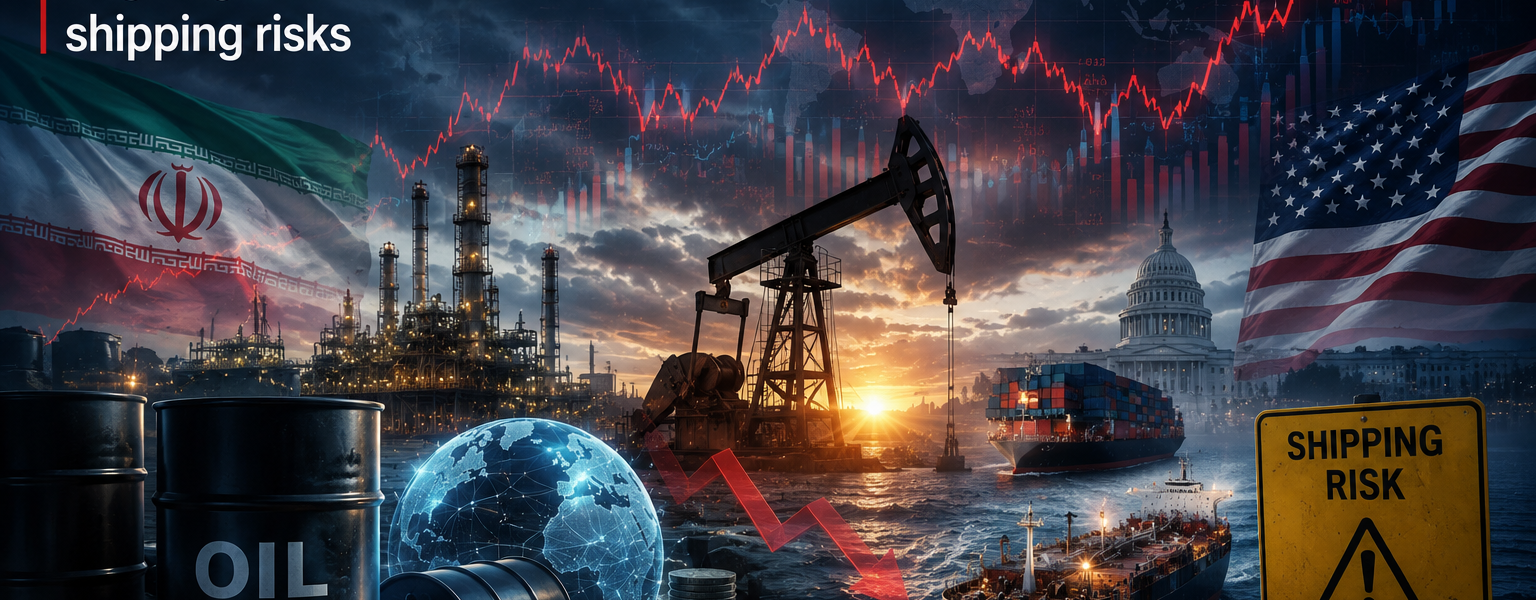
Oil & Global Economy: Crude prices remain unstable amid ongoing Iran-US tensions and shipping risks
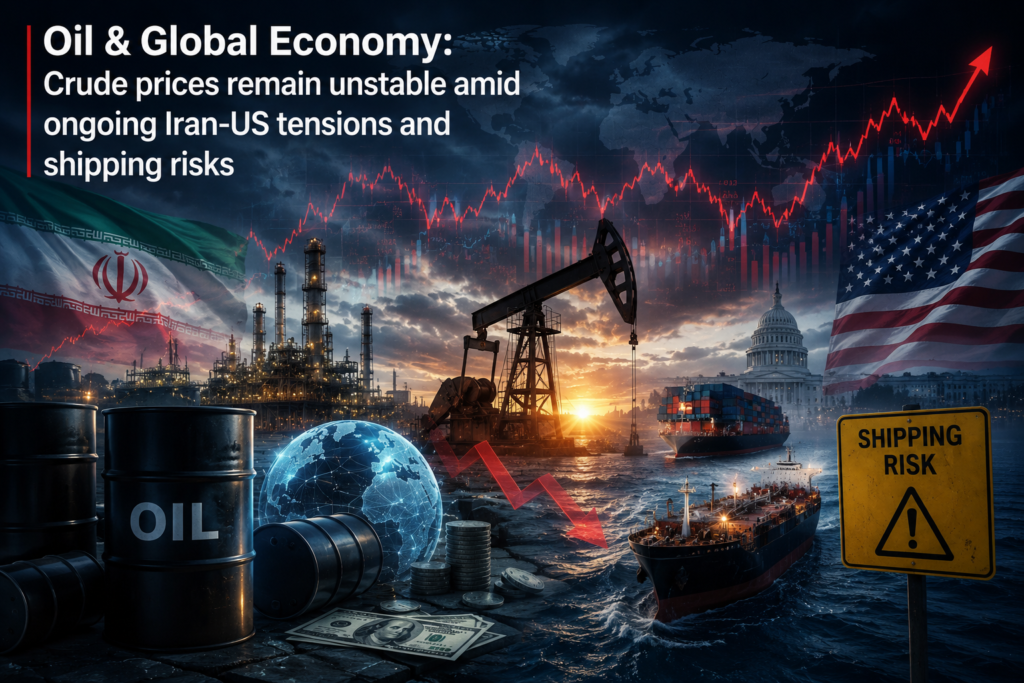
The Energy Shock That Is Reshaping the World
Seventy days into the most disruptive energy crisis since the 1970s oil embargo, global crude markets are lurching between hope and despair and the world economy is paying the price. What began as a military confrontation between the United States, Israel, and Iran on February 28 has evolved into what international institutions are now calling the greatest energy security challenge in modern history.
The head of the International Energy Agency has described the situation caused by the war as the “greatest global energy security challenge in history.” The closure of the Strait of Hormuz has been the largest disruption to world energy supply since the 1970s energy crisis and the largest in the entire history of the global oil market.
Brent crude oil prices surpassed $100 per barrel on March 8 for the first time in four years, rising to $126 per barrel at their peak. The largest-ever monthly increase in oil prices occurred in March 2026.
PART I — THE OIL MARKET: A WEEK OF HISTORIC VOLATILITY
The Most Volatile Trading Week of 2026
Last week produced some of the most dramatic price swings in oil market history — surpassing even the COVID collapse of 2020 in terms of single-session percentage moves.
Crude oil prices experienced one of the most volatile trading weeks of 2026 during May 3 through May 7, as traders reacted to the ongoing US–Iran conflict, disruptions in the Strait of Hormuz, and sudden changes in diplomatic negotiations. June West Texas Intermediate crude futures swung violently between a high of $107.46 and a low of $88.66 before stabilising near $97 a barrel by the end of the week.
The biggest driver behind the rally early in the week was the continued closure of the Strait of Hormuz. Tensions escalated sharply on Monday after Iran launched missiles and drones targeting the UAE near the key oil export hub at Fujairah. The market reaction was immediate WTI crude surged above $106 a barrel, reaching the highest level of the week as buyers scrambled to secure supplies
Wednesday’s Historic Plunge
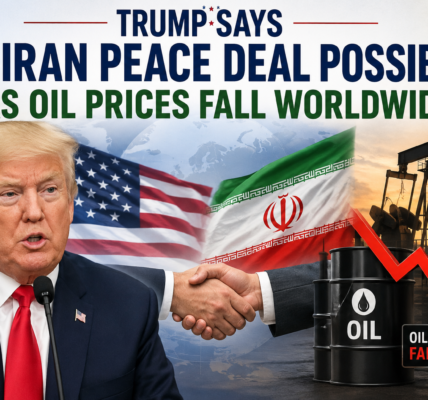
The tone of the market shifted dramatically in the middle of the week after reports surfaced that the United States and Iran were discussing a possible peace agreement. News reports indicated that negotiators had drafted a framework that could reopen the Strait of Hormuz, pause military operations, and ease sanctions on Iranian oil exports. The response in crude oil markets was historic — WTI crude plunged nearly 15% intraday on Wednesday, marking the largest one-day decline since the COVID-19 market collapse.
Where Prices Stand Now
Brent crude futures fell about 1% to close at $100.06 a barrel on Thursday, while US West Texas Intermediate futures settled at $94.81 per barrel. Oil was down about 5% earlier in the session on hopes that the US and Iran would strike
PART II — THE STRAIT OF HORMUZ: THE WORLD’S MOST DANGEROUS CHOKEPOINT
Twenty Percent of the World’s Oil Gone
Roughly 20% of the world’s oil and LNG normally passes through the Strait of Hormuz, and the disruptions caused Brent crude prices to jump by 10–13% in early trading when the closure was announced. In 2024, an estimated 84% of crude oil and condensate shipments through the strait were destined for Asian markets, with China receiving a third of its oil via the strait. Europe gets 12–14% of its LNG from Qatar through the strait.
Following the closure of the Strait of Hormuz on March 4, oil and LNG exports were stranded, causing Brent crude to surge past $120 per barrel and forcing QatarEnergy to declare force majeure on all exports. The oil production of Kuwait, Iraq, Saudi Arabia, and the UAE collectively dropped by a reported 6.7 million barrels per day by March 10, and by at least 10 million barrels per day as of March 12.
The Alternative Routes Are Not Enough
Saudi Arabia diverted oil to the Red Sea port of Yanbu via the East–West Crude Oil Pipeline, while the UAE diverted oil via the Abu Dhabi Crude Oil Pipeline to the port of Fujairah. Iraq has an alternative route via the Kirkuk–Ceyhan Oil Pipeline through Turkey. However, the combined capacity of these pipelines is about 9 million barrels per day less than the roughly 20 million barrels per day that previously passed through the strait. The Red Sea route is also vulnerable to possible Houthi attacks.
And now, even the Fujairah bypass is under threat. Iran’s drone strike on the Fujairah oil refinery on May 4 which handles approximately 1.7 million barrels per dayforced ADNOC to shut down production and suspended oil-loading operations at the emirate’s key terminal, eliminating the most important alternative route for Gulf crude.
1,600 Ships Still Stranded
Before the war, more than 120 ships a day on average passed through the vital waterway. While some producers, including Saudi Arabia and the UAE, have found alternative routes for their exports, around 10–12 million barrels of crude remain choked off from global markets, according to analysts.
The restriction of shipments by more than 90% around 10 million barrels per day of oil productionhas raised energy and agricultural input costs worldwide. The International Maritime Organization reported on April 21 that about 20,000 mariners and 2,000 ships remained stranded in the Persian Gulf because of the closure.
PART III WHAT THE WORLD’S INSTITUTIONS ARE SAYING
The IMF: On the Edge of Global Recession
The 2026 Iran war has halted the global economic momentum that had carried over from 2025. The IMF’s reference forecast, which assumes a short-lived conflict and a moderate 19% increase in energy commodity prices in 2026, still puts global growth at only 3.1% this year and headline inflation at 4.4%a sharp deviation from the global disinflation trend in recent years.
If oil prices on average hover around $100 a barrel as they have in recent weeks the IMF forecasts global growth to fall to 2.5% this year. In the worst case scenario, in which supply disruptions persist into next year, the IMF predicts global growth could fall to around 2%, which would represent “a close call for a global recession.” Growth has only fallen short of 2% four times since 1980
The World Bank: The Biggest Energy Price Surge in Four Years
Energy prices are projected to surge by 24% this year to their highest level since Russia’s invasion of Ukraine in 2022. Overall commodity prices are forecast to rise 16% in 2026, driven by soaring energy and fertilizer prices and record-high prices for several key metals. Attacks on energy infrastructure and shipping disruptions in the Strait of Hormuz which handles about 35% of global seaborne crude oil trade — have triggered the largest oil supply shock on record, with an initial reduction in global oil supply of about 10 million barrels per day.
World Bank Chief Economist Indermit Gill captured the cascading nature of the crisis in stark terms: “The war is hitting the global economy in cumulative waves: first through higher energy prices, then higher food prices, and finally, higher inflation, which will push up interest rates and make debt even more expensive. The poorest people, who spend the highest share of their income on food and fuels, will be hit the hardest, as will developing economies already struggling under heavy debt burdens. All of this is a reminder of a stark truth: war is development in reverse.”
Goldman Sachs: Inventory Warning
Total global oil stocks, including crude and refined products held both on land and at sea, are estimated at about 101 days of demand currently and could fall to 98 days by end of May. While that remains above emergency thresholds, the aggregate figures mask sharper shortages in specific regions and products. Goldman’s analysts pointed out: “Our estimates of supply of refined products and countries’ own crude stocks point to higher risks of product scarcity in South Africa, India, Thailand, and Taiwan.”
PART ICOUNTRY BY COUNTRY: HOW THE WORLD IS COPING
Asia The Hardest Hit Region
Asian countries are the primary destination for crude oil from the Gulf, with most of it travelling via the Strait of Hormuz. In 2024, around 84% of the crude oil and 83% of the LNG passing through the strait went to Asia nearly 70% of the oil went to China, India, Japan, and South Korea.
Because the Philippines imports 98% of its oil from the Middle East, the closure threatens the country’s energy supply. On March 24, 2026, President Bongbong Marcos declared a state of national energy emergency. Myanmar has restricted private vehicle use to alternate days, and there are long queues at petrol stations. Nepal announced that authorities would refill only half of consumers’ empty cylinders to lengthen liquid petroleum stockpiles.
Japan, despite sourcing 94.2% of its crude oil imports from the Middle East as of February 2026, has partly mitigated the impacts through large stockpiles. On March 16, the government started releasing 80 million barrels of oil equivalent to 15 days of domestic demand from its strategic reserves.
Europe Stagflation Threat Grows
The European Central Bank postponed its planned interest rate reductions on March 19, raising its 2026 inflation forecast and cutting GDP growth projections. Economists warned that energy-intensive economies face high risks of technical recession if the maritime blockade persists through the summer refill season. UK inflation is expected to breach 5% in 2026.
The crisis has further impacted industrial output in the UK and EU, where chemical and steel manufacturers have imposed surcharges of up to 30% to offset surging electricity and feedstock costs, potentially leading to permanent deindustrialisation in some sectors. The ECB warned that a prolonged conflict will likely trigger a period of stagflation and push major energy-dependent economies, including Germany and Italy, into technical recession by end of 2026.
The president of the European Commission said the crisis could last months or years. The IMF says Britain will take the biggest hit of any major economy because of its exposure to natural gas prices. The UK’s food and drink federation warned that food price inflation could triple by the end of this year.
Africa and Latin America
In Nigeria, the weakened naira, rising inflation, and higher import costs are tightening the squeeze on households. Essential goods, from food to medicines, are becoming less affordable. For many Nigerians, this distant conflict is now a daily economic reality.
In South America, the crisis has created a stark economic divide. While oil exporters like Brazil and Venezuela are seeing revenue windfalls from spiked global prices, oil-importing nations and domestic consumers are facing severe inflationary pressure, transport disruptions, and social unrest.
In Mexico, the government has pulled out all the stops to keep prices from going up — fuel is being subsidised, and the government has capped the price of tortillas at $1.22 a kilo. But for ordinary Mexicans, it is not enough. “Everything feels like it’s out of control,” one resident told NPR. “The price of chicken suddenly spikes. The price of eggs goes up.”
PART V THE HIDDEN CRISIS: FOOD, FERTILIZER, AND FAMINE RISK
This is the dimension of the 2026 energy crisis that receives the least attention and may ultimately be the most catastrophic.
The Fertilizer Collapse
Fertilizer prices are projected to increase by 31% in 2026, driven by a 60% jump in urea prices. Fertilizer affordability will fall to its worst level since 2022, eroding farmers’ incomes and threatening future crop yields. If the conflict proves more prolonged, pressures on food supply and affordability could push up to 45 million more people into acute food insecurity this year, according to the World Food Programme.
Countries dependent on Gulf fertilizer shipments are already suffering a massive shortfall, and food costs are starting to soar. The Persian Gulf region accounts for roughly 30–35% of global urea exports and around 20–30% of ammonia exports. Overall, up to 30% of internationally traded fertilizers normally transit the Strait of Hormuz.
Brazil is almost entirely dependent on imported fertilizers, with nearly half of its supply transiting the Strait of Hormuz. Given that Brazil accounts for nearly 60% of global soybean exports and is a major exporter of corn and sugar, a sustained fertilizer shortage or price surge could compel farmers to reduce usage, causing a drop in crop yields with significant implications for global food security.
If the war continues, fertilizer shortages will hit more upcoming planting seasons and may well ignite a South Asian hunger crisis.
The Helium Crisis A Semiconductor Emergency
One of the most overlooked but economically critical secondary effects of the war is the collapse of global helium supply.
QatarEnergy supplies 34% of the world’s helium, which is critical for semiconductor manufacture. It shut down on March 4 following the Strait closure. By March 18–19, 17% of its capacity was destroyed by missiles. Repairs will take approximately four years. This poses an existential threat to global semiconductor production at precisely the moment when AI and advanced computing demand is at an all-time high.
PART VI AVIATION, SHIPPING AND SUPPLY CHAINS
Aviation has been significantly disrupted due to the closure of airspace on key flight corridors between Africa, Asia, and Europe. Airlines have been rerouting flights along longer paths that circumnavigate the Middle East, adding to journey time and fuel costs. Several major airports in the Middle East, which collectively handle around 15% of global air traffic, have also been closed.
On May 2, 2026, Spirit Airlines ceased all operations, citing rising fuel costs despite the Trump administration’s attempts to save the company.
The maritime blockade triggered a concurrent “grocery supply emergency” across GCC states, which rely on the strait for over 80% of their caloric intake. By mid-March, 70% of the region’s food imports were disrupted, forcing retailers like Lulu Retail to airlift staples, resulting in a 40–120% spike in consumer prices.
PART VII CENTRAL BANKS IN AN IMPOSSIBLE POSITION
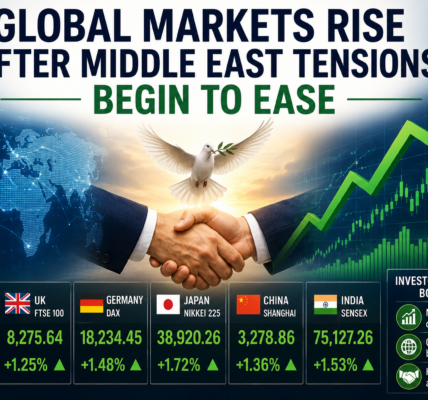
The conflict has echoed the 1970s energy crisis through acute supply shortages, currency volatility, inflation, and heightened risks of stagflation and recession. Interest rate reductions were expected to be postponed or conversely increased in light of higher inflation caused by supply shortages and speculation. Stock markets experienced declines globally, and there was a global bonds market sell-off.
Higher commodity prices constitute a textbook negative supply shock raising costs for energy-intensive goods and services and disrupting supply chains. These effects could be amplified as firms and workers try to recoup losses, risking wage-price spirals, especially where inflation expectations are poorly anchored. Heightened macro risks and the prospect of tighter monetary policy could trigger a sudden repricing by financial markets with much lower asset valuations, higher risk premia, more capital flight, and dollar appreciation.
In developing economies, inflation is now projected to average 5.1% in 2026 under baseline assumptions a full percentage point higher than was expected before the war. Precious metals continue to break price and volatility records, with average prices forecast to increase 42% in 2026, as geopolitical uncertainty fuels demand for safe-haven assets.