Most people don’t know this hobby exists until they fall down a YouTube rabbit hole at midnight watching someone silently open a padlock in under ten seconds. Then they’re hooked. The locksport community is one of the most welcoming, knowledge-sharing groups in any hobby space and getting started costs less than a decent dinner out. Here’s everything you need to know to go from zero to your first successful open.
What Is Locksport?
Locksport is the sport of defeating locks legally, ethically, and recreationally. It covers not only the mechanics and techniques for picking standard pin tumbler locks, but also more exotic lever locks, opening safes with dial manipulation, and using impressioning to make keys for locks without taking them apart. No Starch Press
It’s not about breaking into things. It’s about understanding mechanical puzzles. As much as locksport is the pursuit and attainment of lock manipulation skills more so, locksport is a shared passion a community of knowledge, collaboration, and celebration of achievement.
Is Locksport Legal?
In most countries and US states, yes with conditions. The key legal principle across most jurisdictions is intent. Owning lock picks is not a crime in most places. Using them on locks you don’t own, or don’t have explicit permission to pick, is where the law draws a hard line.
California’s legal code can look intimidating at first glance. The most effective way to separate yourself from illicit activity is to treat your hobby as a formal discipline. California Penal Code 466, for example, makes possession of lock picks illegal only when paired with criminal intent — possession alone does not constitute a crime for ethical hobbyists.
If you’re carrying tools in public, use a dedicated carrying case and proper vehicle storage techniques to show lawful intent. Laws vary by country and state, so always check your local regulations before buying tools.
The Golden Rules Every Beginner Must Know
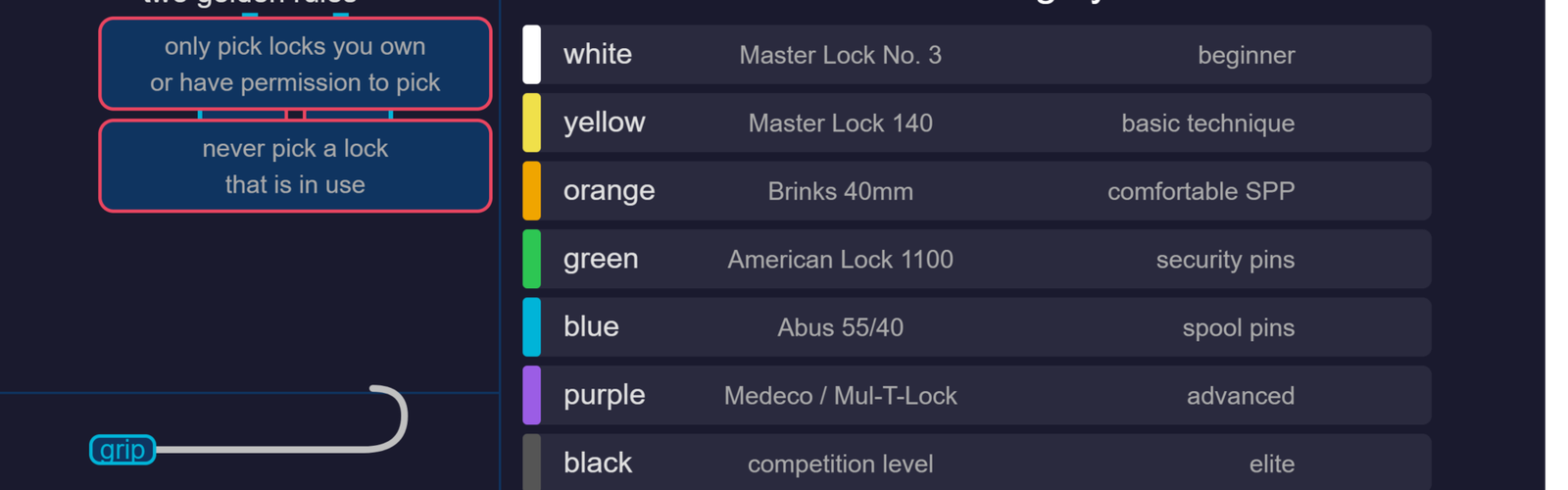
The locksport community runs on two unbreakable ethical rules. Break either one and you’ll find yourself unwelcome fast.
- Only pick locks you own or have explicit permission to pick.
- Never pick a lock that is in use meaning never pick a lock that’s actually securing something.
The intention behind locksport is not to undermine security but rather to understand and enhance it. Responsible behavior within the community is crucial to maintaining ethical standards. Engaging in locksport should not involve causing harm or damage.
Your First Lock Pick Set
Starter Tools You Actually Need
You don’t need an expensive kit to begin. A basic starter set covers everything a new picker needs:
- Short hook pick your primary tool for single pin picking
- Shallow hook for tighter keyways
- Rake (city or snake rake) faster but less precise; great for beginner practice
- Tension wrenches (top and bottom) at least two sizes; these matter more than most beginners realize
Budget range: $15–$40 covers a solid beginner set from brands like Sparrows or Peterson. Your beginner kit won’t work on advanced locks and that’s fine. In beginner lockpicking, your pick set selection should mirror your current skill level to keep your practice focused and professional.
- Electric pick guns
- Snap guns
- Plug followers and plug spinners
- Specialty dimple picks
Save those for when you’ve hit the intermediate belt rankings. Buying advanced tools too early is one of the most common beginner mistakes.
The LPU Belt Ranking System Explained
The Lock Pickers United (LPU) belt system provides a clear, structured roadmap for your progress. It’s not just a list; it’s a curriculum. Think of it like a martial arts belt system applied to lock picking.
| Belt | Level | Example Locks |
|---|---|---|
| White | Total beginner | Master Lock No. 3, simple brass padlocks |
| Yellow | Basic technique solid | Master Lock 140, Abus 55/40 |
| Orange | Comfortable with SPP | Master Lock 3, Brinks 40mm |
| Green | Security pins introduced | American Lock 1100, Master Lock 570 |
| Blue | Intermediate — spool pins | Abus 55/40, Mul-T-Lock Junior |
| Purple | Advanced technique | Medeco, Abloy Protec |
| Brown | High-security specialist | Abloy Protec2, Evva MCS |
| Red | Expert level | Mul-T-Lock MT5+, BiLock |
| Black | Elite — competition level | Anything goes |
Most beginners reach orange or green belt within their first three months of consistent practice. You’ll hit plateaus. You’ll encounter a lock that feels impossible. This is normal. It’s a sign that you’re pushing your limits and are on the verge of a breakthrough. Don’t get discouraged; get curious.
Best Locks to Start With
| Lock | Why It’s Good for Beginners | Approximate Cost |
|---|---|---|
| Master Lock No. 3 | Industry-standard beginner lock, widely available | $5–$8 |
| Abus 55/40 | Slightly tighter tolerances, good feedback | $8–$12 |
| Master Lock 140 | Four-pin, great for learning tension control | $6–$9 |
| Brinks 40mm Brass | Smooth, clear feedback for new pickers | $5–$10 |
| Reese Towpower padlock | Budget practice option, very forgiving | $4–$7 |
Buy two or three of your first practice lock. You’ll want to pick the same lock repeatedly to build muscle memory before moving on.
Where to Find the Locksport Community
The locksport community is spread across several active platforms in 2026. Here’s where to plug in:
- r/lockpicking on Reddit the most active English-language locksport forum, with daily progress posts, belt submissions, and a dedicated wiki for beginners. One of the best-documented community resources available.
- Lock Pickers United Discord the official LPU Discord server is a fantastic place for immediate feedback. Real-time help from experienced pickers, belt rank verification, and dedicated beginner channels.
- TOOOL (The Open Organisation Of Lockpickers) — TOOOL has local chapters that host hands-on events. Groups like TOOOL are great opportunities to meet like-minded enthusiasts in a friendly and welcoming environment. Chapters exist across the US, Netherlands, UK, and beyond. Lockpick ProsNYC Resistor
- Locksport International — the governing body for organized locksport competitions, running events and certifying competitions at a global level.
- Local hackerspaces — hackerspaces regularly host locksport workshops perfect for beginners and experienced lock pickers alike, guided by expert instructors who teach about different types of locks and share tips and tricks to improve skills.
Best YouTube Channels to Learn From
These three channels are widely considered the community’s gold standard for learning:
- LockPickingLawyer legendary for a reason, offering masterclasses in technique and tool selection. His videos cover everything from $2 padlocks to $500 high-security cylinders. Best for seeing technique demonstrated clearly.
- BosnianBill another legendary channel for technique and deep-dives into lock mechanics. More detailed breakdowns of how locks work internally.
- Lock Noob community-favourite channel focused specifically on the beginner-to-intermediate journey, documenting belt progression in real time.
Your First 30 Days: A Beginner Roadmap
Week 1 — Tools and basics
- Buy a basic pick set (Sparrows Reload or similar)
- Pick up 2–3 Master Lock No. 3 padlocks
- Join r/lockpicking and read the wiki top to bottom
- Watch LockPickingLawyer’s beginner playlist
Week 2 — First opens
- Focus only on tension control, not picking yet
- Practice inserting and removing tension wrenches smoothly
- Attempt your first rake opens — don’t worry about technique, just feel the feedback
Week 3 — Single Pin Picking (SPP)
- Switch from raking to single pin picking on the Master Lock No. 3
- Learn to feel the difference between a set pin and a loose pin
- Aim for your first clean SPP open by end of the week
Week 4 — Belt submission and community
- Record a clean video open of your White Belt lock
- Submit to the r/lockpicking belt ranking thread
- Join the LPU Discord and introduce yourself
- Buy your next practice lock (yellow belt level)
Learning from experienced locksmiths and other locksport enthusiasts will help jumpstart this captivating journey.
FAQ
1. Is locksport legal?
In most countries yes, with the condition that you only pick locks you own or have permission to pick. Laws vary — always check your local jurisdiction before purchasing tools.
2. How much does it cost to start locksport?
A solid beginner pick set costs $15–$40. Add $20–$30 for a few practice locks. You can get started for under $60 total.
3. What lock should a complete beginner start with?
The Master Lock No. 3 is the community’s universal recommendation. It’s cheap, widely available, and gives clear tactile feedback for new pickers.
4. What is the LPU belt system?
It’s a community-run ranking system — similar to martial arts belts — that tracks your progression through increasingly difficult locks, from White Belt beginner locks all the way to Black Belt expert-level security locks.
5. Where is the best place to connect with the locksport community online?
r/lockpicking on Reddit and the Lock Pickers United Discord server are the two most active and beginner-friendly hubs in 2026.
6. How long does it take to pick your first lock?
Most beginners get their first successful rake open within a few hours of practice. A clean single pin pick on a basic lock typically takes a few days to a few weeks of regular practice.
7. Can locksport improve real-world security knowledge?
Yes. The underlying principle of locksport is to promote knowledge, skill-building, and the responsible use of acquired skills. Many pickers end up with a much better understanding of which locks actually offer real security and which don’t.
Final Thoughts
The locksport community is one of the most accessible skill-based hobbies you can pick up in 2026. Low startup cost, clear progression through the belt system, active online communities, and in-person events through TOOOL and local hackerspaces mean you’re never learning alone. Start with a basic pick set, grab a few cheap padlocks, and join r/lockpicking. Your first satisfying click is closer than you think.