Epstein Island in 2026: Where It Is, Who Owns It Now and What Actually Happened on Little St. James
If you’ve typed “epstein island” into a search bar lately, you’re in very big company. Few places on Earth have a reputation that travels as fast as a 72-acre speck of land in the Caribbean. People want to know where it is. They want to know what it looks like, whether anyone lives there, who bought it and what the heck went on there in the first place. And since the U.S. Justice Department started publishing the so-called Epstein files, the questions have only multiplied. The trouble is that the internet is a messy place to learn about this. Half of what you’ll find is recycled rumor. The other half is a headline that promises “the truth” and delivers three paragraphs of nothing. So let’s do this differently. This article walks through what’s actually documented about the island: its name, its location, its history, its sale and its current state. Where something is an allegation rather than an established fact, I’ll say so. Where we simply don’t know, I’ll say that too.Grab a coffee. This one’s long, but you’ll come out the other side knowing more than most of the people confidently arguing about it online.
What Is “Epstein Island,” Exactly?
First, a naming issue that trips a lot of people up. There isn’t one “Epstein Island.” There are two islands and the nickname usually gets slapped on both.
Little St. James is the one at the center of everything. It’s where Epstein built his main compound, where he spent a lot of his time, and where federal prosecutors later said some of the worst conduct took place. Epstein himself reportedly liked to call it “Little St. Jeff’s,” a nickname that has been repeated in plenty of news coverage. Locals, understandably, have used other and far less flattering names for it over the years, and some media outlets have too.
Great St. James is the bigger neighbor, sitting just to the north. Epstein bought it in 2016. According to lawyers for the U.S. Virgin Islands, the larger island helped block outside views of the smaller one. That’s their characterization from litigation, so treat it as an allegation, but it’s an interesting detail because it shows how closely people have scrutinized the geography.
When someone searches “who owns Epstein Island now,” the answer covers both. When they search “Epstein Island photos,” they’re almost always looking for Little St. James, since it’s the one with the buildings.You’ll also see people searching for odd spellings like “epstien island,” “epsteins island,” or “esptein island.” Search engines handle those fine, but if you’re ever trying to find sources, the clean spelling and the real name, “Little Saint James” or “Little St. James,” will get you better results.
Where Is Epstein Island Located?
This is the single most-searched question, so let’s be precise.
Little St. James sits in the U.S. Virgin Islands, a U.S. territory in the eastern Caribbean. More specifically, it’s southeast of the island of St. Thomas, roughly two miles off St. Thomas’s East End. On a clear day you can see it from the shore, which is partly why it became such a morbid curiosity for tourists after 2019.
Some quick geography to help you picture it:
- The U.S. Virgin Islands consist of three main islands: St. Thomas, St. John, and St. Croix, plus dozens of smaller islets and cays.
- St. Thomas is the most developed and the most visited, home to the territory’s capital, Charlotte Amalie, and its main airport.
- Little St. James is one of those smaller islets, a private property reachable only by boat or helicopter.
- It’s about 1,100 miles southeast of Miami and sits at roughly 18 degrees north latitude, which is tropical, warm, and honestly, beautiful.
People also search for an “address.” There isn’t a street address in the way you’d think of one, though property records and legal filings do reference locations on the island. If you’re picturing a place you can plug into Google Maps and drive to, no. It’s a boat ride away and the dock is private. If you really want to see where it is, satellite view on any map app will show you the small, roughly kidney-shaped island with its cluster of buildings and a dock on the northern end. That’s the closest legal look anyone’s going to get.
What Does the Island Look Like?
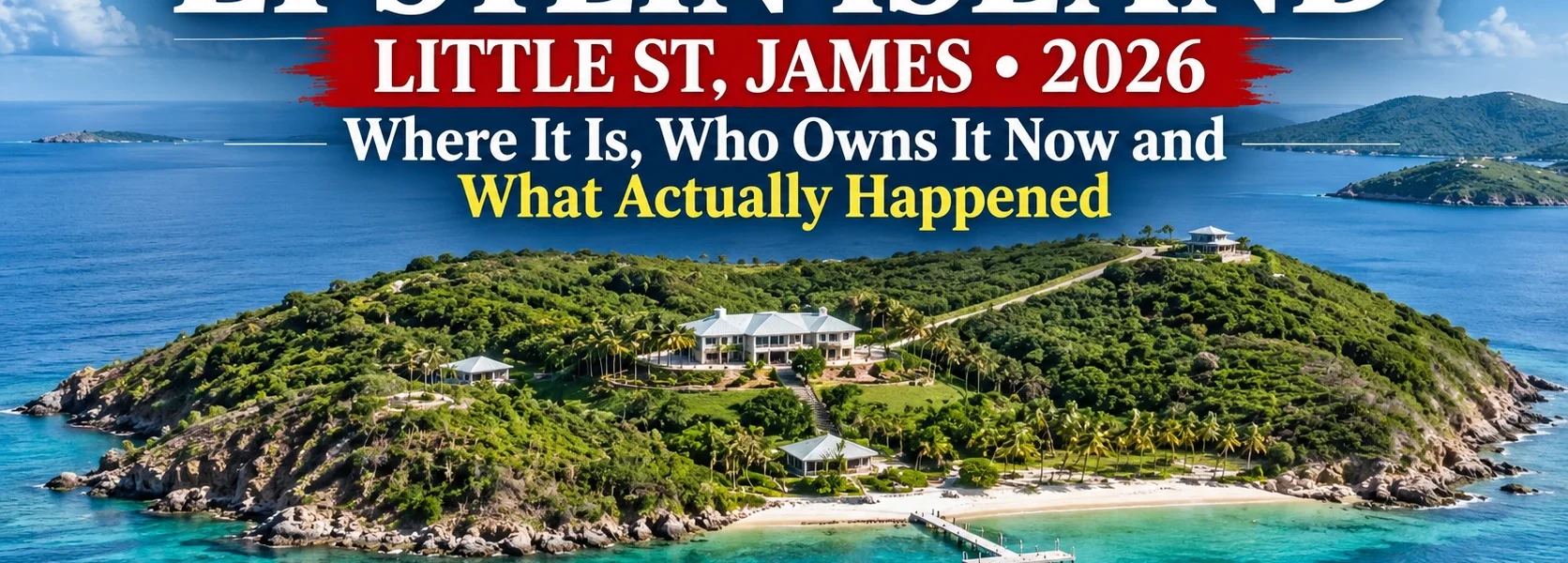
The most common follow-up search after “where is it” is “what does it look like,” and “Epstein Island pictures” gets thousands of impressions. Here’s what’s been widely reported and photographed.
Size. Around 71.6 acres, according to listing details reported by NPR when the property was sold. That’s small, a little bigger than 50 football fields, and you could walk across it in a short stroll.
The compound. The island has a main residence and, according to reporting from the sale, four guest villas. There are also staff buildings, a helipad, and a dock. The whole thing sits among low hills covered in tropical vegetation, with white sand beaches on parts of the shoreline.
The striped building. If you’ve seen a photo of Epstein Island, you’ve probably seen the blue-and-white striped building with the gold-topped roof sitting on a high point of the island. It became one of the most photographed structures in recent memory. Online, people have called it a “temple,” and a thousand theories have sprung up about its purpose. What’s actually documented is thinner than the rumors: it’s a distinctive structure, aerial photos made it famous, and no one has publicly established the sinister function that some online posts claim. If you see someone declaring with total confidence what the building was “really” used for, ask for the source.
The “LSJ” boat. Reporting from the CBS News coverage notes that a boat marked with the letters LSJ was used to ferry staff and supplies to the island. It’s a small detail, but it’s a reminder that this was a working property with employees, logistics, and routines, not just a vacation home.
What it looks like today. Reporting in the years after the sale described the island as quiet. A local newspaper, the Virgin Islands Daily News, reported that the only construction permit the new owner had requested was for an 8,800-square-foot warehouse on Little St. James. So if you’re imagining bulldozers and a luxury hotel going up, that’s not what the permit records show.
How Epstein Got the Island
Let’s rewind. Jeffrey Epstein bought Little St. James in 1998, paying around $8 million, according to reporting. He listed it as his primary residence, which, as we’ll see, became important in his finances and his legal troubles.Why the Virgin Islands? A big reason, widely reported, was tax advantage. The territory offered tax incentives for businesses that relocated there, and Epstein set up businesses with a Virgin Islands base. Over time, the island became not just a home but a headquarters of sorts.
In 2016, he bought neighboring Great St. James for roughly $18 million. By the time of his death in 2019, Little St. James alone had been valued at close to $70 million, according to Britannica’s summary. That’s a remarkable appreciation, though keep in mind that “valued at” and “sold for” are different things, and when the properties actually hit the market, they sold for much less.
What Allegedly Happened on Little St. James
This is the section where precision matters most, so I’ll be careful about what’s established, what’s alleged, and what’s rumor.
What’s established
Jeffrey Epstein was a convicted sex offender. In 2008, he pleaded guilty in Florida to state charges that included procuring a minor for prostitution, and he served a short jail sentence, much of it on work release, under a deal that was criticized for years as shockingly lenient.
In July 2019, federal prosecutors in New York arrested him on sex trafficking charges. The indictment alleged he had sexually abused and exploited underage girls at his homes in Manhattan and Palm Beach. Weeks later, in August 2019, he was found dead in his cell at a Manhattan federal jail. His death was ruled a suicide.His longtime associate Ghislaine Maxwell was arrested in 2020, convicted of sex trafficking-related charges in December 2021, and sentenced to 20 years in prison.As for the island specifically, federal prosecutors later described Little St. James as a central location in Epstein’s trafficking operation, as Newsweek’s reporting notes. That’s a significant statement from law enforcement, and it’s part of why the island is so notorious.
What survivors and legal filings have alleged
Accounts from survivors, along with court filings from the U.S. Virgin Islands government, describe Little St. James as a place where Epstein brought young women and girls and where they were abused. One alleged victim told CBS News that she was brought there and described the experience on the condition of anonymity. Another account, reported by CBS, describes a 15-year-old who allegedly tried to escape.The Virgin Islands government’s lawsuit against Epstein’s estate, which came after his death, argued that the island was used to hold people and to keep them away from outside help. Their lawyers claimed Epstein bought the second island partly to obscure the first from view. Those are allegations made in litigation, and the case was resolved by settlement rather than a trial, so those claims weren’t tested in court the way a criminal verdict would be.
What’s rumor
And then there’s the vast, murky world of internet speculation. You’ll find claims about secret tunnels, hidden rooms, specific named visitors, and elaborate rituals. Some of it spreads because it’s sensational and because nobody can easily verify it.Here’s my honest advice: stick with court records, official releases, and reputable reporting. If a claim about the island comes with no source, or only a screenshot or a “my cousin’s friend said,” treat it as noise. And be especially careful about claims that attach a specific named person to specific conduct. Being photographed with someone, being mentioned in a document, or flying on a plane is not the same as being accused of a crime. Even the Justice Department itself has said that the mere presence of a name in these files doesn’t indicate wrongdoing, and it has also said some material in the releases contains false or sensationalist claims. Good reporting separates those things. Bad reporting doesn’t.
After 2019: The Estate, the Lawsuit and the Sale
When Epstein died, his properties didn’t just vanish. His estate had to deal with them, and the islands sat in a kind of limbo for years.
The Virgin Islands lawsuit
The U.S. Virgin Islands government sued Epstein’s estate, accusing it of using the territory’s laws and location to facilitate trafficking. In a settlement reported in late 2022, the estate agreed to pay the territory a large sum, reported as $105 million, and the arrangement included a share of the proceeds from the eventual sale of the islands. NPR’s 2023 coverage of the sale noted that the Virgin Islands government was due to receive half of the proceeds from the sale of Little St. James. Separately, banks were drawn into the fallout. JPMorgan Chase settled with the Virgin Islands in 2023 and with a group of survivors as well, and, according to news reports, Bank of America reached its own settlement with accusers in 2025. These cases are a big part of the broader story, because they ask a question that goes beyond one man: how did a convicted sex offender keep functioning inside the financial system for so long?
The listing and the price drop
The islands were put on the market at around $110 million for the pair. That price didn’t hold. In May 2023, billionaire Stephen Deckoff, through his firm SD Investments, bought both Great St. James and Little St. James for $60 million, a steep discount.Pause on that for a second. A property once valued at close to $70 million on its own, and listed at $110 million with its neighbor, sold for $60 million total. That tells you something about how toxic the brand of the place had become. Most buyers wouldn’t touch it.
Who Owns Epstein Island Now?
Stephen Deckoff does. He’s the founder of Black Diamond Capital Management, a private equity and credit investment firm, and he’s been described in various outlets as a billionaire with a net worth somewhere in the neighborhood of $2.8 to $3 billion. According to reporting, there have been no indications of a personal relationship between Deckoff and Epstein. He bought the property from Epstein’s estate, not from Epstein himself.When he bought the islands, he announced big plans. His statement described a “state-of-the-art, five-star, world-class luxury 25-room resort” intended to boost tourism, create jobs, and support economic development while respecting the environment of the islands. At the time, he said architects and engineers were being hired and the resort could open as early as 2025.
So where’s the resort?
Here’s where the story gets quiet. It’s now late 2026, and, per the most recent reporting I could find, no resort has opened. The Virgin Islands Daily News reported that the only construction permit Deckoff had requested was for a warehouse. Newsweek followed up with a piece noting that the resort originally expected to open in 2025 hasn’t materialized and that permit records suggest little progress.Why might that be? We don’t know for certain, and it would be irresponsible to guess too confidently. Some reasonable possibilities people have raised include:
- Permitting and environmental review. Building on a small island in a fragile marine environment takes time and approvals.
- Logistics and cost. Everything, from building materials to workers, has to be brought in by boat.
- Reputation. It’s hard to market a vacation getaway on a property tied to some of the most notorious allegations in modern history.
- Strategy. The owner may simply be taking his time.
Those are possibilities, not findings. If you’re writing about this, it’s worth checking for fresh updates, because plans can change. At the time of the sources I reviewed, the honest status was: owned by Deckoff, resort promised, resort not open.
Is Epstein Island Still Active? Is It Abandoned?
These two questions pop up constantly, with versions like “is epstein island still active,” “is epstein’s island abandoned,” and “does epstein island still exist.”
Does it still exist? Yes. It’s a real, physical island, and it’s not going anywhere.
Is it “active”? If you mean the operations people associate with Epstein, no. Epstein is dead, his estate has divested, and the property belongs to a new owner. If you mean “is anyone there at all,” it’s a privately owned property with at least some maintenance and security presence, as you’d expect for a high-value asset, though the public details are limited.
Is it abandoned? Not in a legal sense. It’s owned, it’s maintained to some degree, and the owner has pulled at least one construction permit. But in the casual sense, as in “nothing’s happening there,” that’s close to accurate based on what’s been reported. Coverage over the years has described the island as quiet, and one CBS News headline put it plainly: Epstein’s Caribbean island “has gone quiet.”
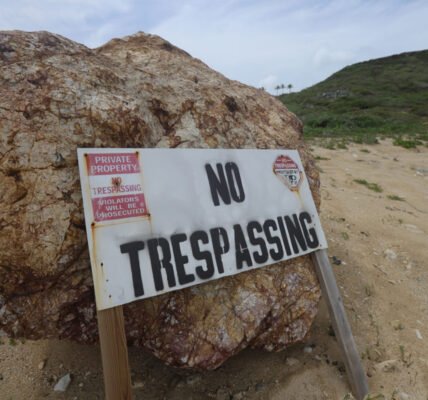
Can you visit? Short answer: no. It’s private property. Tour boats have, at times, sailed past for a look from a distance, which is a legal vantage point on public water, but landing is trespassing. Beyond the legal issue, there’s a real ethical one. This is a place linked to alleged harm to young women and girls, and treating it like a quirky photo op doesn’t sit right with a lot of people, including survivors.
If you’re planning a Virgin Islands trip, there are about a hundred better stops, from the beaches of St. John to the snorkeling off the smaller cays. Leave this one alone.
The Epstein Files and the Island
Now for the piece that has pushed all this back into the headlines: the Epstein files.
How the files came out
For years, people demanded the government’s records on Epstein. In late 2025, Congress passed the Epstein Files Transparency Act, and President Trump signed it. It required the Justice Department to release its unclassified Epstein-related files by December 19, 2025, with exceptions for things like survivors’ personal information.The Justice Department did release material, but not everything on the deadline, which drew bipartisan criticism. The first drop in December 2025 was around 3,900 files, mostly photographs, many heavily redacted. A larger batch followed, more than 11,000 files totaling nearly 30,000 pages, including emails, court records, FBI and DOJ documents, news clippings, audio, and video. Then, on January 30, 2026, the department released a much bigger trove, reported as about 3 million pages, including documents and photos.
What the files have and haven’t shown
If you came here hoping for a single smoking-gun document about the island, I’d gently say: that’s probably not how this works. What the releases have done is give researchers, journalists, and the public a huge pile of raw material to work through. Reporters at major outlets, such as CBS News, assembled teams to go through the files and flag notable findings, and they’ve published searchable databases.
Some points worth knowing:
- The material is a mixed bag. It includes FBI case files, records from earlier investigations in the mid-2000s, reviews of Epstein’s death in custody, outside tips received by investigators, news articles forwarded among DOJ staff, and photographs. A lot of it is context, not conclusions.
- Appearing in the files isn’t an accusation. Many names show up simply because they were mentioned in an email, a news clipping, or a tip. The Justice Department itself said some documents contain “untrue and sensationalist claims,” including ones about President Trump, that were submitted to the FBI before the 2020 election. Readers should keep that in mind and avoid jumping from “mentioned in a document” to “guilty of something.”
- Photos of Epstein’s properties are in there. The first release included images of Epstein’s travels and his various homes, which is part of why “epstein island photos” and “epstein files island” searches have spiked.
- The redactions have been a major problem. Survivors and their attorneys criticized the department after reports that some victims’ identities were not properly redacted in the larger release. One attorney called it “patently absurd,” and a survivor told CBS she was speechless at how bad the redactions were. That matters, because the whole point of the law’s redaction rules was to protect victims.
- More is still being fought over. Lawmakers have pressed for access to unredacted files and asked why only part of the estimated total was published. And the Deputy Attorney General has said the releases don’t necessarily mean new charges will follow.
So if someone tells you “the files prove X about the island,” ask which file, which page, and who wrote it. A tip submitted to the FBI is not the same as a verified finding, and a photo with no caption is just a photo.
Why this matters for how you read online
When a story this big collides with millions of pages of documents, misinformation has a field day. A cropped screenshot, a misread file number, or a lookalike document can go viral in minutes. Several of the searches that land on sites like this one include actual document identifiers, strings of letters and numbers that look like Bates numbers from the release. That tells you people are trying to verify things themselves, which is great. Just remember that a document ID tells you where something is in the archive, not whether it’s true.
Why Does the Island Keep Trending?
So why are people still searching for this, years after Epstein’s death and well after the sale? A few reasons.
1. The story never got a clean ending. There was never a trial for Epstein. He died before one. That left a vacuum, and people want answers. The files, the lawsuits, and the settlements each get a chunk of the truth out, but none delivers the full picture.
2. The island is visual. Stories travel faster when there’s an image. The aerial shots of the striped building, the white-sand coastline, and the clustered villas give the whole saga a face. It’s the kind of picture that sticks in your mind, which is partly why “epstein island pictures” is such a perennial search.
3. Politics. The Epstein case has become entangled in political fights, which keeps it in the news cycle. Every new release, every congressional hearing, every statement from the Justice Department sends a fresh wave of people to search engines.
4. The sale and the resort. A billionaire promising a luxury resort on such a notorious property is inherently a news hook, and each update on the stalled plans brings a fresh round of curiosity.
5. Real-world consequences keep unfolding. Bank settlements, survivor lawsuits, and congressional investigations mean there’s always another development. A story with ongoing legal consequences stays in the news.
A Quick Timeline, So Nothing Gets Lost
Long stories are easier to follow with a clear sequence of events. Here’s the island’s story at a glance, using only the dates covered above:
- 1998: Epstein buys Little St. James for about $8 million and lists it as his primary residence.
- 2008: Epstein pleads guilty in Florida to state charges, including procuring a minor for prostitution, and serves a short sentence on a deal that was widely criticized.
- 2016: He buys neighboring Great St. James, the larger island.
- July 2019: Federal prosecutors in New York arrest him on sex trafficking charges.
- August 2019: He is found dead in a Manhattan federal jail; the death is ruled a suicide.
- 2020 to 2022: Ghislaine Maxwell is arrested, convicted in December 2021, and sentenced to 20 years.
- Late 2022: The estate reaches a reported settlement with the U.S. Virgin Islands government.
- May 2023: Stephen Deckoff buys both islands for about $60 million, after they were listed at roughly $110 million.
- 2025: The promised opening year for a luxury resort passes without one. Congress passes the Epstein Files Transparency Act, and the Justice Department begins releasing records in December.
- January 2026: A much larger release, reported at around 3 million pages, lands, along with fresh criticism over redactions.
- Late 2026: The islands remain in Deckoff’s hands, and local reporting still shows little visible construction.
Seen in one list like this, the pattern is clear. The island’s public life has really been a long series of reckonings: legal, financial, and political. Each time one chapter closes, another opens, and that’s exactly why the search volume never really drops.
Frequently Asked Questions
What is Epstein Island called? Its actual name is Little St. James (also written Little Saint James). Epstein reportedly nicknamed it “Little St. Jeff’s.” Its neighbor is Great St. James.
Where is Epstein Island located? In the U.S. Virgin Islands, about two miles off the East End of St. Thomas.
How big is Epstein Island? Little St. James is about 71 to 72 acres. Great St. James is roughly 160 acres.
Who owned Epstein Island before Epstein? The detailed earlier ownership history isn’t something I’ve verified here, so I won’t guess. What’s documented is that Epstein bought Little St. James in 1998.
When did Epstein buy his island? He bought Little St. James in 1998 for about $8 million and Great St. James in 2016.
Who owns Epstein Island now? Billionaire investor Stephen Deckoff, via SD Investments, purchased both islands in May 2023 for a reported $60 million.
What happened to Epstein Island? After Epstein’s death in 2019, the properties went through a period of legal limbo, were listed for sale, and were sold in 2023. A resort was promised, but as of recent reporting, it hasn’t opened.
Is there a resort on Epstein Island? Not as of the latest reporting I found. The planned 25-room luxury resort has not materialized, and permit records suggest limited progress.
Can you visit Epstein Island? No. It’s private property, and landing without permission would be trespassing.
What happened on Epstein Island? Federal prosecutors have described Little St. James as a central location in Epstein’s sex-trafficking operation, and survivors have given accounts of abuse there. The Virgin Islands government also sued the estate, and that case ended in a settlement. Many online claims go well beyond what’s documented, so stick to credible sources.
Is Epstein Island real or fake? Real. You can see it on satellite maps, and it’s been photographed extensively and described in court filings and news reporting.
How many islands did Epstein own? Two: Little St. James and Great St. James.
What does Epstein Island look like? A small tropical island with a main residence, guest villas, a helipad, a dock, and the famous blue-and-white striped building on a hilltop. Beaches ring parts of the shoreline.
What’s in the Epstein files about the island? The releases include photographs of Epstein’s homes and travels, along with FBI and DOJ records, emails, and other documents. They don’t provide a single definitive account of the island, and much of the material is raw, unverified, or context-dependent.
Why are there so many misspellings in searches? Because it’s a name people have heard far more often than they’ve seen written. “Epstien,” “esptein,” and “epsteins” are all common typos. Search engines usually correct them.
A Note on Reading This Story Responsibly
There’s one more thing I want to say, and it’s not an SEO point. It’s a human one.Behind the aerial photos and the real-estate figures are real people: young women and girls who say they were abused, and survivors who’ve spent years being doubted, scrutinized, and, in some cases, re-harmed by sloppy handling of the very files meant to help them. When we treat this story like a thriller or a conspiracy-board puzzle, it’s easy to forget that.
So here’s how I’d suggest reading and sharing about it:
- Prefer primary and reputable sources. Court records, official DOJ releases, and established news organizations beat anonymous accounts every time.
- Separate allegation from finding. “Alleged” and “proven” mean different things. Keep them apart.
- Don’t pin accusations on people because of a name in a document. The files contain tips, forwarded articles, and sensational claims alongside verified material.
- Respect survivors. Don’t share unredacted identities, and don’t speculate about who the victims are.
- Be wary of “secret” content. If it’s presented as a secret revealed by one random account, it’s more likely clickbait than truth.
Final Thoughts
Epstein Island is a small piece of land that carries an enormous weight of meaning. Physically, it’s a 72-acre tropical islet off St. Thomas with a cluster of buildings, a dock, and a view that would be stunning under any other circumstances. Historically, it’s tied to one of the most disturbing criminal enterprises of the past few decades, according to prosecutors, survivors, and the Virgin Islands government.As of 2026, it belongs to Stephen Deckoff, who bought it with a vision of a five-star resort that hasn’t yet appeared. The files released by the Justice Department have given the public an unprecedented, if messy and imperfect, window into the broader case, while also raising serious questions about redactions, completeness, and what’s still being withheld.
If you take one thing from all this, let it be this: the truth here is both less sensational and more serious than the rumor mill suggests. The documented facts are heavy enough on their own, and they deserve to be reported carefully.The story isn’t over. More documents, more lawsuits, and more developments about the islands’ future are likely. When they come, check the sources, keep your skepticism in good working order, and remember who this story is really about.
Sources
- Who Owns Epstein Island Now? Update on Billionaire Plan to Build New Resort, Newsweek
- Financier buys Jeffrey Epstein’s private islands, with plans to create a resort, NPR
- Still no resort plans for Epstein’s islands purchased by Deckoff, Virgin Islands Daily News
- Who owns Jeffrey Epstein’s island?, Britannica
- Where is Jeffrey Epstein’s island, and what reportedly happened on Little St. James?, CBS News
- A billionaire has bought Jeffrey Epstein’s private islands, Fortune
- Epstein files live updates, CBS News
- Epstein files live updates on DOJ release with 3 million documents, CBS News
Editor’s note before publishing: details such as the Virgin Islands settlement amount, the 2016 purchase price of Great St. James, and the Bank of America settlement come from general reporting I recalled rather than the pages listed above, so double-check them against a current source and add a link. Also re-check the status of the resort right before you publish, since it may change.