The Most Dangerous Diplomatic Gamble of 2026
Seventy days into the most disruptive energy crisis since the 1973 oil embargo, the United States and Iran are hovering on the edge of either a historic breakthrough or a catastrophic resumption of war. President Trump declared this week that a deal is close but Tehran and Washington are still sending contradictory signals, the Gulf is witnessing fresh military skirmishes, and 1,600 ships remain stranded in the world’s most important waterway.
American officials have reportedly suggested that the US is the closest it has been to reaching a deal with Iran to end the war, even as Iranian officials have publicly offered a more pessimistic view. Iran is expected to respond to a possible framework deal to end the US-Israel war in the Middle East, according to US officials. Al Jazeera
Trump’s Message: Sign or Face the Consequences
The President has been characteristically blunt and unambiguous in his public communications this week.
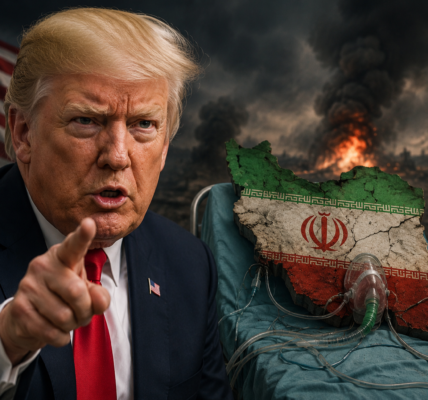
Trump wrote on Truth Social on Wednesday morning: “Assuming Iran agrees to give what has been agreed to, which is, perhaps, a big assumption, the already legendary Epic Fury will be at an end, and the highly effective Blockade will allow the Hormuz Strait to be OPEN TO ALL, including Iran. If they don’t agree, the bombing starts, and it will be, sadly, at a much higher level and intensity than it was before.”
Trump signalled progress in the negotiations, saying talks have been “very good” and that the war will “be over quickly,” even as Iran played down reports that an agreement was close, saying it had yet to present its response to Pakistani mediators. Time
The terms of a potential deal, Trump told PBS News, would include Tehran shipping its enriched uranium stockpile to the US and pledging not to operate its underground nuclear facilities.
What the One-Page MOU Contains
The document at the heart of these negotiations is a deceptively simple one-page text but its consequences for global energy markets, nuclear non-proliferation, and the balance of power in the Middle East would be profound.
The one-page, 14-point memorandum of understanding is being negotiated between Trump’s envoys Steve Witkoff and Jared Kushner and several Iranian officials, both directly and through mediators. In its current form, the MOU would declare an end to the war in the region and start a 30-day period of negotiations on a detailed agreement to open the strait, limit Iran’s nuclear program, and lift US sanctions. Those negotiations could happen in Islamabad or Geneva. Wikipedia
Under the proposed framework, Iran would lift restrictions on transit through the Strait of Hormuz that have been in place since early March, choking global energy flows and shipping. At the same time, the US would lift its naval blockade on Iranian ports. The key terms also reportedly include a moratorium on Iranian nuclear enrichment, lifting of US sanctions on Iran, and the release of billions of dollars in Iranian funds frozen around the world. Al Jazeera
US media reported the two sides are “getting close” to an agreement under which Iran would agree not to develop a nuclear weapon and halt enrichment of uranium for at least 12 years. Time
Iran: Reviewing But Deeply Divided
Tehran’s public posture has been notably more cautious than Washington’s optimism.
Iran’s government confirmed it is reviewing the latest US peace proposal, with Foreign Ministry spokesman Esmaeil Baqaei stating that Tehran would convey its position to Pakistani intermediaries after finalising its response. Neither the Trump administration, Tehran, nor Pakistan confirmed any details of the latest iteration of the proposal. Wikipedia
The White House believes the Iranian leadership is divided and it may be hard to forge consensus across different factions. Some US officials remain skeptical that even an initial deal will be reached. US officials have expressed optimism about a deal at several points during previous rounds of negotiations and during the current war but have yet to reach one. Wikipedia
Iran has also staked out a firm position on the future of the waterway itself. Iranian state media said that traffic through the Strait of Hormuz will be controlled in the future under a new system “that will likely reflect a new balance of power and security considerations” in the region, with bordering states Iran and Oman playing a central role. Iran considers the Strait of Hormuz strategically linked to its national security, and any long-term governance structure for the waterway should be determined through regional dialogue. Wikipedia
The Lebanon Complication
One of the most persistent obstacles to any Iran deal is a conflict happening hundreds of miles away in southern Lebanon.
The ongoing fighting in Lebanon has remained a major complicating factor in efforts by Pakistan to broker a diplomatic end to the war between the US and Iran. Tehran has thus far refused to agree to any wider peace deal that does not include a halt to Israel’s fight with Hezbollah in Lebanon. Wikipedia
Israeli Prime Minister Benjamin Netanyahu is holding talks with Trump administration officials to better understand the latest developments in the negotiations between the US and Iran. Netanyahu said he speaks with Trump “almost on a daily basis,” adding: “We have full coordination, there are no surprises. We share common goals, and the most important goal is to remove the enriched material from Iran all the enriched material and dismantle Iran’s enrichment capabilities.” Arab Center DC
Gulf Flashpoints The Ceasefire Under Fire
Even as diplomats negotiated in back channels, soldiers and sailors were exchanging fire in the Strait of Hormuz and the Gulf.
The IRGC allegedly launched missiles and drones at the United Arab Emirates on Monday and Tuesday, the first such attacks since the April 8 truce. An oil facility in Fujairah was struck, wounding three Indian workers. Iran denied involvement. CNN
On Wednesday, US forces struck an Iranian-flagged oil tanker, the M/T Hasna, in the Strait of Hormuz, with US Central Command saying the vessel was transiting international waters to an Iranian port and failed to comply with “multiple warnings” that it was in violation of the blockade. Al Jazeera
The US and Iran each claimed they had hit the other’s ships, and each denied the other’s claims of success. Joint Chiefs of Staff Chairman General Dan Caine said the incidents remained “all below the threshold of restarting major combat operations.” US Defense Secretary Pete Hegseth said the ceasefire “certainly holds.” CNN
1,600 Ships Stranded and Going Nowhere
The humanitarian and commercial dimension of the Hormuz crisis is staggering and largely invisible to global news consumers.
About 1,600 ships are still stuck in the Strait of Hormuz, with shipping companies facing an expensive and risky situation and looking for windows of opportunity to leave the waterway after more than two months. Trump’s operation to “guide” ships through the strait lasted just 48 hours only two ships were guided through. Insurers have wartime clauses in their contracts that do not require them to cover vessels stuck in the middle of a war, so moving ships without that financial backing risks being extraordinarily costly. Arab Center DC
Gene Seroka, executive director of the Port of Los Angeles, noted that even with a US military guide, leaving the Strait of Hormuz requires a “very specific assessment” for shipping companies. Arab Center DC
Project Freedom: The Operation That Lasted Two Days
One of the week’s most significant events was not a battle but a reversal.
On Monday morning, the United States Navy began escorting commercial vessels through the Strait of Hormuz under “Project Freedom.” By Tuesday afternoon, the operation had been paused. Trump announced the reversal on Truth Social, citing the “request of Pakistan and other countries” and “great progress” towards a “complete and final agreement” with Iran. legitgov
Trump wrote: “We have mutually agreed that, while the Blockade will remain in full force and effect, Project Freedom will be paused for a short period of time to see whether or not the Agreement can be finalized and signed.” legitgov
Analysts noted the deeper significance. Andreas Krieg, associate professor at King’s College London’s School of Security Studies, described the US withdrawal from Project Freedom as a limited but meaningful concession: “Washington has accepted that the simultaneous resolution of the war, Hormuz, and the nuclear file in one final package is not currently feasible.” CNN
Pakistan The Indispensable Mediator
Once again, Islamabad finds itself at the centre of a geopolitical crisis far larger than its own.
Pakistan’s Prime Minister Shehbaz Sharif lauded President Trump on Wednesday for pausing Project Freedom, naming Saudi Arabia’s Crown Prince Mohammed bin Salman as a key partner who encouraged the US to suspend the military mission in the waterway. Sharif wrote that Pakistan was “very hopeful that the current momentum will lead to a lasting agreement that secures durable peace and stability for the region and beyond.” Wikipedia
Pakistan’s Foreign Ministry spokesperson Tahir Andrabi told NPR: “Our hope and expectation is for an agreement sooner rather than later.” Iranian Foreign Ministry spokesperson Baqaei confirmed that Iran will convey its views to the Pakistani side after finalising its response to the US proposal. NPR
The Hajj Factor A Diplomatic Deadline Nobody Is Talking About
A little-noticed but potentially powerful constraint is now entering the picture.
The approaching Hajj pilgrimage adds a separate constraint. With roughly 1.8 million Muslims expected to converge on Mecca from around May 25, including Iranian pilgrims, any escalation during that period would carry severe political costs for all parties. For Iran, the ability of its citizens to perform Hajj carries enormous domestic religious and political significance. For Saudi Arabia, the world’s largest Muslim gathering cannot be overshadowed by a Gulf war. This silent deadline may be doing more diplomatic work than any formal negotiation. CNN
France Enters the Picture
French President Emmanuel Macron called for the resumption of traffic in the Strait of Hormuz after a conversation with Iranian President Masoud Pezeshkian: “All parties must lift the blockade of the strait, without delay and without conditions. We must durably return to the regime of full freedom of navigation that prevailed before the conflict.” Macron encouraged others to join a multinational mission proposed by France and the UK to secure shipping in the waterway, saying: “The return of calm in the strait will help advance negotiations on the nuclear issue, the ballistic issue, and the regional situation.” Arab Center DC
France also moved its nuclear-powered aircraft carrier Charles de Gaulle to the Red Sea — a signal that Europe is no longer content to watch from the sidelines.
The Naval Blockade: 25 Days and Counting
The US naval blockade of Iran, imposed on April 13 following the failure of the Islamabad Talks, has now been in place for over three weeks. US Central Command reported that, as of Wednesday, its blockade had turned around 52 vessels. Iran has seized two cargo ships in retaliation. The blockade has been costing Iran an estimated $500 million daily, according to US figures. NPR
What Happens Next The 72-Hour Window
The world is now in a critical window. Iran’s formal response to the US MOU proposal was expected Thursday or Friday. As of this morning, it has not been publicly delivered. Every hour that passes without a response increases the risk of either a diplomatic collapse or a fresh military escalation in the Strait.
If Iran accepts the MOU framework:
Oil prices could fall $10–20 per barrel within hours. The 30-day negotiation period begins. The naval blockade and shipping restrictions are gradually lifted. Global markets rally. The Hajj proceeds without incident.
If Iran rejects or ignores the proposal:
Trump has explicitly threatened resumed bombing “at a much higher level and intensity.” Oil could spike back toward $120 or beyond. The 1,600 stranded ships remain hostage to a conflict with no exit in sight.
The wild card:
“The balance of deterrence is currently skewed in Iran’s favour, and I think this reality is slowly sinking in in Washington,” one analyst told Al Jazeera. Both sides know the cost of resumption. Whether that mutual understanding translates into a signed piece of paper this week, in Islamabad or Geneva remains the defining question of 2026. Middle East Eye
Bottom Line: This is not merely a US–Iran bilateral dispute. It is a global energy emergency, a nuclear proliferation crisis, a test of international maritime law, and a defining moment for Pakistan’s diplomatic standing all compressed into a single one-page document that has not yet been signed. The world is watching Islamabad. And Islamabad is watching Tehran.