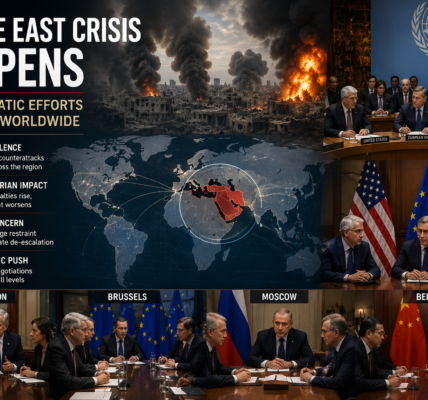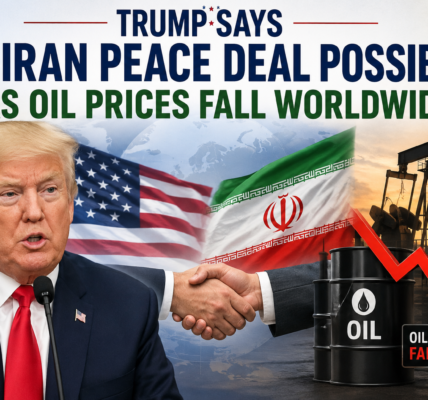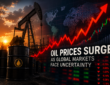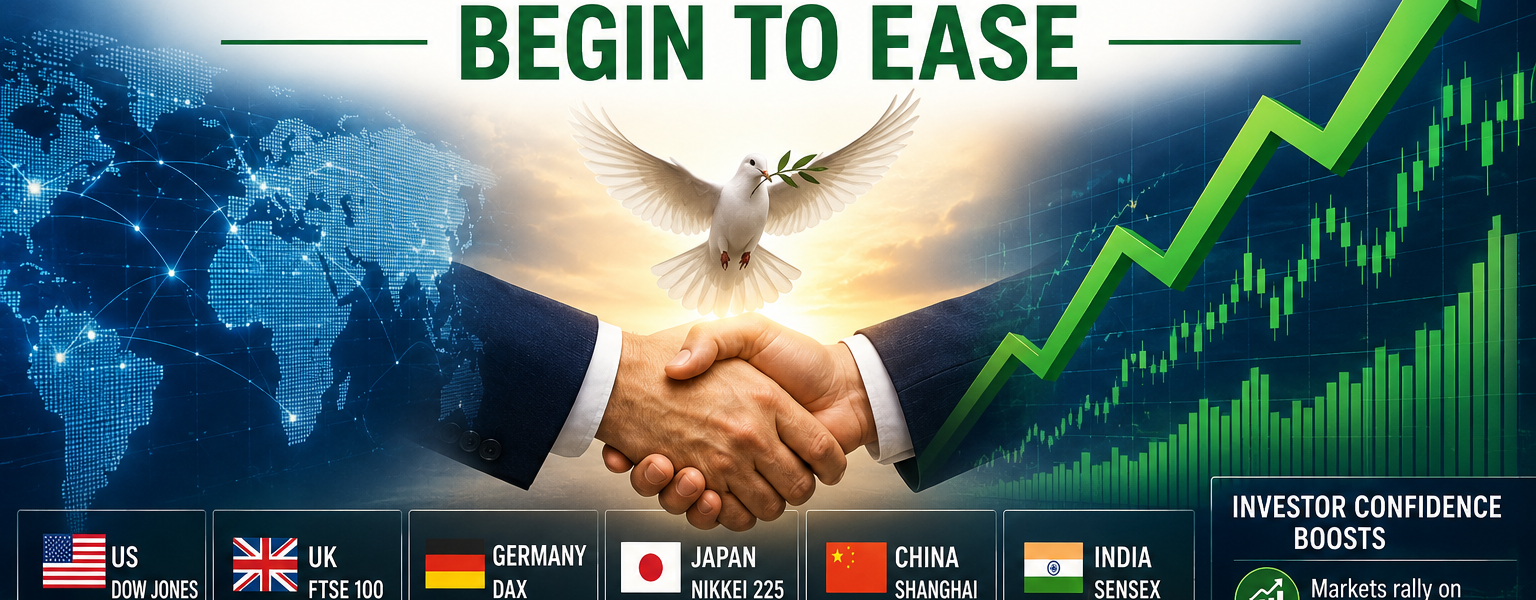
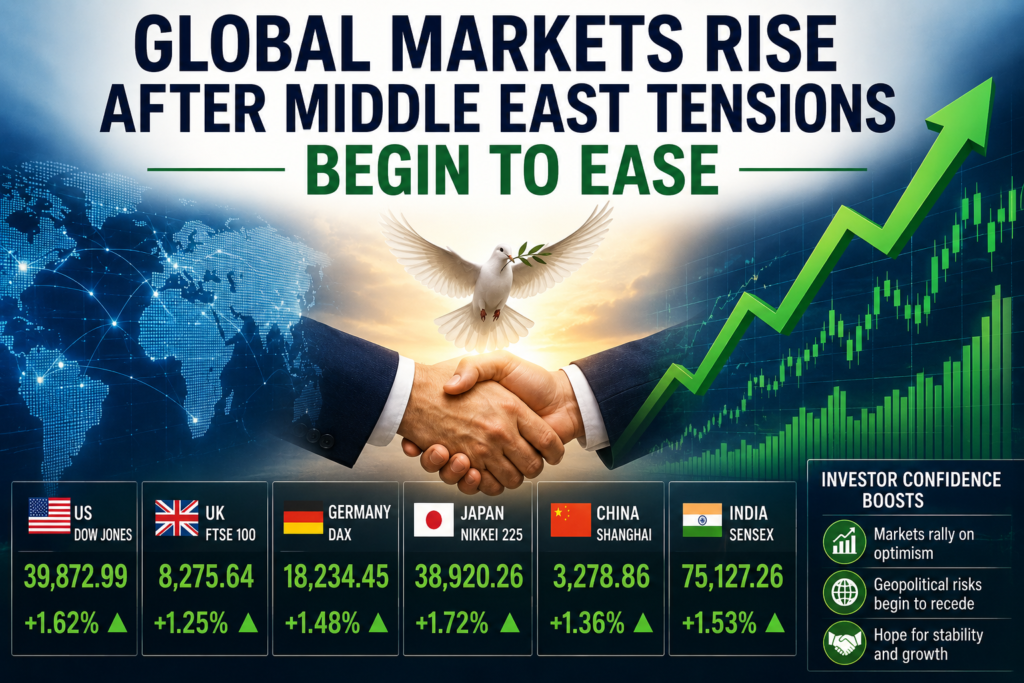
After weeks of turbulence that rattled financial markets worldwide, investors woke up on Thursday to a more optimistic outlook. Brent crude oil fell below $100 a barrel as Asian markets reached new all-time highs and European stocks rose at the open, following reports that the US and Iran are nearing a deal for the gradual reopening of the Strait of Hormuz.
The news marks a significant turning point in one of the most disruptive geopolitical crises of the year and global markets have responded with visible enthusiasm.
What Triggered the Rally?
On Wednesday, oil prices had already fallen nearly 8% while global equities rallied after US President Donald Trump signalled that a breakthrough with Iran was close, raising hopes the blockade could soon ease.
The Strait of Hormuz’s effective closure during the conflict severely disrupted global oil flows, fuelling inflation and driving energy prices higher worldwide. Any credible signal of its reopening therefore carries enormous weight for commodity markets, shipping lanes, and energy-dependent economies alike.
At the time of writing, the front-month contract on Brent crude is trading at around $99.7 per barrel, while the US benchmark WTI sits at $93.6.
Wall Street Leads the Charge
US stocks remained resilient, supported by a strong start to the 2026 earnings season. The S&P 500 rose 1.5% to a record high, while the Dow Jones Industrial Average gained 1.2% and the Nasdaq Composite climbed 2%.
The tech sector led gains. AMD jumped 18.6% after beating profit and revenue forecasts, while Super Micro Computer soared 24.5% on stronger-than-expected results. NVIDIA rose 5.7%, making the single largest contribution to the S&P 500’s advance due to its outsized market value.
Outside tech, CVS Health gained 7.6% after raising its full-year outlook, while The Walt Disney Company climbed 7.5% after noting that anticipation for Zootopia 2 had boosted interest across its streaming, parks and cruise businesses.
Currency Markets React
In currency markets, the US dollar edged down to 156.32 Japanese yen from 156.40 yen, while the euro strengthened slightly to $1.1756 from $1.1747. A softening dollar typically signals reduced safe-haven demand itself a sign that risk appetite is returning to markets.
The Bigger Picture: What the IMF Had Warned
The market relief comes after weeks of serious economic concern. Global financial markets had entered 2026 from a position of strength asset prices were rising, volatility was subdued, and financial conditions were easy by historical standards. That backdrop was then tested by the outbreak of war in the Middle East. International Monetary Fund
Under the assumption of a limited conflict, global growth is now projected at just 3.1% in 2026 and 3.2% in 2027 below recent outcomes and well under pre-pandemic averages. Global inflation is expected to tick up before resuming its decline in 2027. International Monetary Fund
The IMF had warned that a longer shutdown of the Strait of Hormuz, combined with further damage to drilling and refining facilities, would disrupt the global economy more deeply and for longer — in an adverse scenario, growth could have fallen to 2.5% with inflation rising to 5.4%. International Monetary Fund
Cautious Optimism Not a Full Victory Lap
While the mood is markedly more positive, analysts urge caution. Market resilience so far reflects cycles of escalation and de-escalation, structural improvements in the financial system, and the absence of a decisive adverse turn rather than a fundamental resolution of underlying risks. International Monetary Fund
The long-term outlook depends largely on geopolitical developments. If tensions in the Middle East ease fully, oil prices may stabilize, providing lasting relief to global markets. But structural vulnerabilities elevated public debt, tight credit spreads, and leverage in parts of the financial system remain in the background. Impact Wealth
What to Watch Next
- Strait of Hormuz deal confirmation Any formal agreement between the US and Iran will be the single biggest catalyst for further market gains and oil price normalization.
- Central bank responses With inflation still above target in key economies, policymakers face a delicate balancing act between supporting growth and keeping prices in check.
- Earnings season continuation Strong corporate results from US tech giants are providing an independent tailwind, regardless of geopolitical outcomes.
- Emerging market exposure Pressures from the conflict remain concentrated in emerging market and developing economies, especially commodity importers with pre-existing vulnerabilities.
Bottom Line: Thursday’s market moves reflect genuine relief but the road to full recovery runs through a negotiating table in the Middle East. Investors are cautiously optimistic, not euphoric. The coming days will be critical.