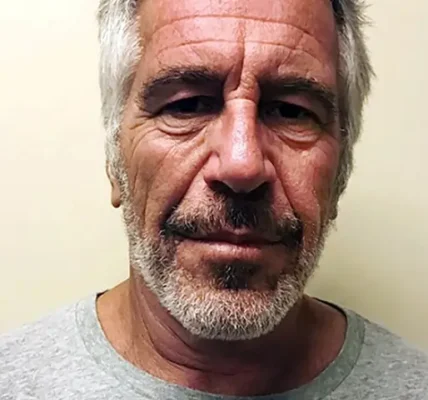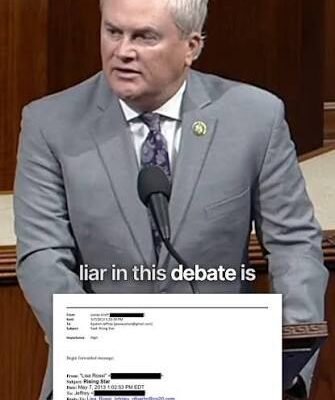
The “Epstein files” refers to the massive collection of government records, court documents, photographs, videos, emails, and investigative materials tied to Jeffrey Epstein, the American financier convicted of sex crimes against minors who died in federal custody in 2019. The term specifically gained widespread use after Congress passed the Epstein Files Transparency Act in November 2025, a law that forced the U.S. Department of Justice to publicly release the records it had collected across multiple criminal investigations into Epstein, his associate Ghislaine Maxwell, and the circumstances surrounding Epstein’s death.
As of mid-2026, the Justice Department has released roughly 3.5 million pages of material, though it has acknowledged identifying about 6 million pages total, and legal battles continue over what remains withheld or redacted. This guide walks through who Epstein was, how the files came to exist, what they contain, why the release has been so controversial, and where things stand today.

Who Was Jeffrey Epstein?
Jeffrey Epstein was a New York financier who built a fortune managing money for billionaires after an early career as a math and physics teacher and a stint at the investment bank Bear Stearns. Over several decades he cultivated a wide social circle that included business leaders, academics, scientists, and political figures on both sides of the aisle, along with British and European elites.
Behind that public profile, Epstein ran what investigators would later describe as a sustained sex trafficking operation. Beginning in the early 2000s, he and associates recruited teenage girls, many of them from vulnerable backgrounds, for what were framed as massage appointments at his homes in Florida, New York, and elsewhere, appointments that investigators say frequently turned into sexual abuse. More than 200 individuals have been identified as victims across the various investigations into his conduct.
Epstein’s properties themselves became part of the story. He owned a townhouse in Manhattan, a ranch in New Mexico, an estate in Palm Beach, and a private island in the U.S. Virgin Islands known as Little St. James, which investigators say was used as a location for some of the abuse. He also kept an extensive contact book, sometimes referred to in media coverage as his “black book,” listing phone numbers and addresses for a huge cross-section of business, political, and entertainment figures, a document that has itself become a recurring subject of reporting as portions of it surfaced in litigation over the years.
The Original Investigation and the 2008 Plea Deal
Epstein’s criminal history dates back to 2005, when the Palm Beach, Florida police department opened an investigation after a family reported that their 14-year-old daughter had been molested at Epstein’s mansion. Detectives went on to identify dozens of additional underage victims and referred the case to the FBI, which opened its own federal investigation in 2006.
What followed became one of the most criticized prosecutorial decisions in recent American legal history. Rather than pursue the federal sex trafficking charges investigators had built, the U.S. Attorney’s Office for the Southern District of Florida, then led by Alexander Acosta, negotiated a non-prosecution agreement with Epstein’s legal team in 2007. Under that deal, finalized in 2008, Epstein pleaded guilty only to state-level charges of soliciting and procuring a minor for prostitution. He served just 13 months in a county jail, most of it under a work-release arrangement that let him leave for up to 12 hours a day, six days a week. The agreement also granted immunity to unnamed “potential co-conspirators,” a detail that would later fuel demands to know who else was protected.
The deal stayed largely out of public view until 2018, when Miami Herald reporter Julie K. Brown published an investigative series called “Perversion of Justice,” which reconstructed the case and interviewed survivors on the record. The series reignited national outrage and set the stage for a new federal case. In February 2019, a federal judge ruled that prosecutors, including Acosta, had violated victims’ rights under federal law by keeping the terms of the non-prosecution agreement secret from them before it was finalized, a ruling that added further pressure for a fresh look at the case.
The 2019 Arrest, Death, and Aftermath
In July 2019, federal prosecutors in the Southern District of New York arrested Epstein at Teterboro Airport in New Jersey, arguing they were not bound by the earlier Florida non-prosecution agreement. He was charged with sex trafficking of minors and conspiracy, and a judge denied him bail after finding he posed a flight risk. Acosta, by then U.S. Secretary of Labor, resigned within days amid renewed scrutiny of his role in the original plea deal.
Epstein never stood trial. On August 10, 2019, he was found dead in his cell at the Metropolitan Correctional Center in Manhattan, roughly two weeks after an earlier injury that investigators described as an apparent suicide attempt. The New York City Medical Examiner ruled the death a suicide by hanging. A Justice Department inspector general later found that jail staff had failed to properly monitor Epstein and that surveillance cameras outside his cell had malfunctioned, findings that have kept alternative theories about his death in public circulation ever since.
Ghislaine Maxwell’s Trial and Conviction
Ghislaine Maxwell, Epstein’s longtime associate, was arrested in July 2020 and charged with helping recruit, groom, and abuse underage girls on Epstein’s behalf. After a monthlong trial, a jury convicted her in December 2021 on sex trafficking and related charges. She was sentenced in 2022 to 20 years in federal prison, where she remains as of 2026. Maxwell has continued to appeal her conviction and has separately fought to keep certain records connected to her case sealed, a fight that has become part of the broader Epstein files story.
What Is the Epstein Files Transparency Act?
For years after Epstein’s death, survivors, journalists, and lawmakers from both parties pushed for the full public release of the government’s investigative files, arguing that the public deserved to know who else may have facilitated or known about Epstein’s abuse. That pressure culminated in the Epstein Files Transparency Act, a bill requiring the Attorney General to make public nearly all unclassified Justice Department records connected to Epstein, including FBI files, flight logs, financial records, and materials related to his death in custody.
The bill’s path to passage was unusually dramatic. House Republican leadership had resisted bringing it to a vote for months, and it only reached the floor after a discharge petition forced the issue once Democratic Representative Adelita Grijalva was sworn in, supplying the final signature needed. On November 18, 2025, the House passed the bill by a vote of 427 to 1, with Louisiana Republican Clay Higgins casting the lone dissenting vote. The Senate approved it the same day by unanimous consent. President Trump, who had spent months opposing the effort and calling it politically motivated, dropped his objection just before the vote and signed the bill into law on November 19, 2025.
The law required the Justice Department to release all unclassified records within 30 days, set a deadline of December 19, 2025, and explicitly barred withholding or redacting information simply to avoid embarrassment or reputational harm to any official or public figure. It did permit redactions to protect victims’ personal information and to avoid compromising active investigations.
What Is Actually in the Epstein Files?
The files are not a single document but a sprawling archive pulled from at least five separate legal and investigative sources: the original Florida and New York criminal cases against Epstein, the New York case against Maxwell, investigations into Epstein’s death in custody, a Florida case involving a former Epstein butler, and various FBI and DOJ Office of Inspector General files.
Materials released so far include:
- Email correspondence between Epstein and a wide range of business, political, and academic contacts
- Flight logs and travel records from Epstein’s private aircraft
- Bank statements and wire transfer records documenting his finances
- FBI interview summaries and investigative reports
- Photographs and videos, some seized during searches of his properties
- Court filings, including grand jury materials from both the Epstein and Maxwell cases
- Contact lists and calendar entries
The Justice Department released an initial batch on December 19, 2025, ahead of its legal deadline, followed by a much larger release on January 30, 2026, which alone added more than 3 million pages, 2,000 videos, and 180,000 images. Officials described the January release as the last major planned production, bringing the total released to roughly 3.5 million pages, though the department has acknowledged that its full collection runs closer to 6 million pages.
The Redaction Controversy
Almost immediately, the releases drew criticism for how they handled redactions. In the first batch, CBS News found that more than 500 pages were entirely blacked out, including a complete 119-page grand jury transcript connected to the Maxwell case. Some fully redacted documents appeared to be duplicates released elsewhere with less redaction, suggesting inconsistent processing rather than a clear standard.
Journalists reviewing later releases found the opposite problem as well: names of previously identified victims and other individuals who had never been publicly named appeared unredacted in some documents, exposing people the law was specifically meant to protect. In several cases, reporters noted redaction choices that seemed selective, including instances where the faces of women were visible while men’s faces nearby were obscured. Deputy Attorney General Todd Blanche, who oversaw the releases, publicly denied that any redactions were made to protect President Trump or any other individual for political reasons, telling reporters the department did not shield anyone from scrutiny in its review process.
Survivors’ advocates have been especially vocal. A group of 18 women who say they were abused by Epstein issued a joint statement after the January release criticizing the government for continuing to expose survivors’ identifying details while, in their view, protecting the men connected to the abuse.
The technical handling of the redactions has drawn its own criticism. In the earliest release, researchers found that some blacked-out sections in PDF files could be recovered simply by copying and pasting the underlying text into a plain text editor, meaning the redaction was cosmetic rather than a genuine removal of the data. Reviewers also flagged that hidden metadata in some files had not been scrubbed, and that the overall archive was not organized chronologically or grouped by case, making it difficult for journalists and the public to navigate without significant manual sorting.
Key Names That Have Surfaced
It is important to state clearly that appearing in the Epstein files, whether in an email chain, a flight log, or a photograph, does not by itself establish wrongdoing. Epstein cultivated relationships with an enormous number of prominent people, and reporters covering the releases have repeatedly noted that many individuals named in the documents have not been tied to any illegal conduct.
That said, several names have drawn sustained scrutiny because of the nature of the communications involved:
- Kathryn Ruemmler, a former White House counsel under President Obama who later became chief legal officer at Goldman Sachs, appeared extensively in released emails, including messages in which she referred to Epstein in familiar terms and reportedly advised him on how to handle questions about his past. She resigned from Goldman Sachs shortly after the January release.
- Lawrence Summers, the former U.S. Treasury Secretary and Harvard University president, stepped down from multiple public and academic positions after emails showed an extensive correspondence with Epstein.
- Peter Mandelson, Britain’s former ambassador to the United States, faced scrutiny after released emails suggested he may have shared sensitive UK government information with Epstein while serving in a prior cabinet role.
- Andrew Mountbatten-Windsor (formerly known as Prince Andrew) was arrested in February 2026 on suspicion of misconduct in public office, with allegations that he shared confidential government documents with Epstein.
- Thomas Pritzker, whose family includes Illinois Governor J.B. Pritzker, was shown in released emails to have continued corresponding and meeting with Epstein years after his 2008 conviction.
Files have also included references to sitting and former political leaders, business executives, and public figures who have publicly stated they were not involved in any wrongdoing and, in several cases, have testified to that effect before Congress. Reporters covering the releases have specifically noted mentions of President Trump, former President Bill Clinton, and Elon Musk within the archive, while also noting that none of the three has been tied to criminal wrongdoing in connection with the files.
Congressional Testimony and Investigations
The House Oversight Committee has used its subpoena power extensively since the files began surfacing. Both Hillary Clinton and Bill Clinton testified behind closed doors in late February 2026, with each denying any wrongdoing; Hillary Clinton told the committee she never met Epstein, while Bill Clinton said he was not involved in any misconduct during his documented contacts with him. Commerce Secretary Howard Lutnick agreed to testify about his own relationship with Epstein and appeared before the committee in May 2026. Attorney General Pam Bondi was subpoenaed in March 2026 over the department’s handling of the releases. Billionaire Leon Black, a co-founder of Apollo Global Management who reportedly paid Epstein roughly $170 million in financial planning fees over the years, testified in June 2026 that he was unaware of any abuse.
Ongoing Legal Battles Over What Remains Hidden
The story is far from over. In June 2026, U.S. District Judge Emmet Sullivan ruled that the Justice Department’s redactions and withheld materials violated the Epstein Files Transparency Act, a finding the Attorney General’s office did not contest. Sullivan ordered the department to either release the outstanding materials or justify withholding them by early July. In a related case, a separate federal judge ruled in August 2026 that additional victim-related files could be made public over objections from Ghislaine Maxwell’s legal team, which had argued the records should remain sealed.
As of August 2026, hearings are ongoing over exactly what the Justice Department is still withholding and why, with the presiding judge in one case reportedly telling government lawyers that the public has a right to understand what has happened with the investigation.
Where Things Stand Now
More than a year after Congress voted almost unanimously to force disclosure, the Epstein files remain a live, evolving story rather than a closed chapter. The Justice Department maintains it has substantially complied with the law, having released roughly 3.5 million of the estimated 6 million pages it holds. Survivors and transparency advocates argue that meaningful compliance is still incomplete, pointing to inconsistent redactions, withheld categories of documents, and ongoing court fights over what should be sealed.
The files have also continued to generate fallout well beyond the courtroom, including resignations from prominent business and academic positions, an arrest of a former member of the British royal family, and a steady stream of congressional testimony from people named in the documents. Some of the authors of the original bipartisan legislation, including Representatives Ro Khanna and Thomas Massie, have publicly pressed to review the unredacted files directly to verify the government’s compliance with the law, a request that underscores how much distrust remains between Congress and the Justice Department on this issue even after the law’s near-unanimous passage.
Given the sheer volume of material, journalists and researchers are expected to continue finding and reporting new details for months or years to come. What began as a single criminal case in a Florida police department two decades ago has become one of the largest public document releases in the history of the Justice Department, and its full political, legal, and personal fallout is still unfolding.
Frequently Asked Questions
What exactly are the Epstein files? The Epstein files are the collection of government investigative records, court documents, emails, financial records, photographs, and videos gathered across multiple federal and state investigations into Jeffrey Epstein and Ghislaine Maxwell, which the Justice Department was legally required to release under the Epstein Files Transparency Act.
When did the Epstein files get released? The Justice Department released an initial batch on December 19, 2025, followed by a much larger release of over 3 million additional pages on January 30, 2026. Additional materials have continued to be released or litigated throughout 2026.
How many pages are in the Epstein files? The Justice Department has released approximately 3.5 million pages as of early 2026, though it has acknowledged that its total collection of Epstein-related material runs to roughly 6 million pages.
Does being named in the Epstein files mean someone did something illegal? No. Being mentioned in an email, flight log, or photograph in the files does not establish wrongdoing. Many individuals named in the documents, including sitting and former public officials, have stated publicly that they were not involved in any illegal conduct, and some have testified to that effect before Congress.
Why are the Epstein files so heavily redacted? The law allows redactions to protect victims’ personal information and to avoid compromising ongoing investigations. In practice, journalists have found the redactions applied unevenly, with some victim information left exposed while other material was blacked out in ways that drew criticism from lawmakers in both parties.
Is Ghislaine Maxwell still in prison? Yes. Maxwell is serving a 20-year federal sentence after her December 2021 conviction on sex trafficking and related charges. She has continued to appeal her conviction and has fought to keep certain records tied to her case sealed.
Where can I read the Epstein files myself? The Justice Department has published the released records in a searchable repository at justice.gov/epstein. Several major news organizations, including CBS News, NPR, and Al Jazeera, have also published guides and searchable databases summarizing key findings from the material.
What happened to Epstein’s private island? Epstein owned a private island in the U.S. Virgin Islands called Little St. James, which investigators say was used as a location for some of the abuse described in the case. The property has since changed ownership, and it continues to come up in reporting and litigation connected to the broader Epstein investigations.
Why did it take so long for the files to be released? Survivors and lawmakers pushed for full disclosure for years after Epstein’s 2019 death, but a formal legal requirement did not exist until Congress passed the Epstein Files Transparency Act in November 2025. Even after the law passed, the Justice Department missed its initial December 2025 deadline and has faced multiple court challenges over incomplete releases and improper redactions throughout 2026.