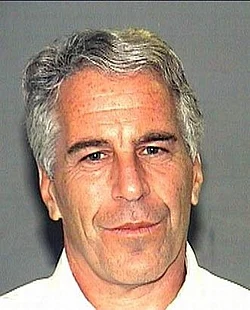
A thirteen-month federal sentence. Work release six days a week. That’s what Jeffrey Epstein got in 2008 for crimes that prosecutors now describe as decades of organized child abuse. The gap between what he did and what he served became one of the starkest examples of justice failing victims. Here’s what the record actually shows.
Who Was Jeffrey Epstein?
Jeffrey Epstein rose from a Wall Street trader to a financier managing money for billionaires. That wealth and access gave him cover. He used his homes in Florida, New York, and the Caribbean to abuse dozens of underage girls over roughly a fifteen-year span, according to court filings.
The 2008 Florida Plea Deal
How the Deal Was Negotiated
Federal prosecutors in Florida built a case that could have resulted in a life sentence. Instead, Epstein’s legal team negotiated a non-prosecution agreement with the U.S. Attorney’s Office. He pleaded guilty to two state prostitution charges instead. He served 13 months in county jail, with work-release privileges that let him leave for twelve hours a day.
Why It Was Later Called a Miscarriage of Justice
A federal judge ruled in 2019 that prosecutors broke the law by failing to notify victims about the deal before finalizing it, violating the Crime Victims’ Rights Act. That ruling didn’t undo the original agreement. But it forced the resignation of then-Labor Secretary Alex Acosta, the prosecutor who oversaw the deal in 2008.
The 2019 Federal Charges
Eleven years after the Florida deal, federal prosecutors in New York charged Epstein with sex trafficking of minors and conspiracy. The new indictment alleged a trafficking operation that recruited girls as young as 14, paid them for “massages,” and used some victims to recruit others. He pleaded not guilty and was denied bail. He died in custody before the case reached trial.
Jeffrey Epstein’s Crimes: Key Facts at a Glance
| Detail | Record |
|---|---|
| First plea deal | 2008, Florida, two state prostitution charges |
| Sentence served | 13 months, with work release |
| Federal indictment | July 2019, sex trafficking + conspiracy |
| Estimated victims | Dozens, per court filings and investigations |
| Co-defendant convicted | Ghislaine Maxwell, sentenced 2022 |
| Case resolution | Dismissed upon Epstein’s death in custody |
How Epstein’s Network Operated
Court documents and victim testimony describe a recruitment pattern that repeated across years:
- Recruitment girls were approached, often by other young women already in the network, with offers of money for massages.
- Grooming initial encounters were framed as legitimate, gradually escalating.
- Logistics private planes and multiple properties moved victims across state and international lines.
- Silence financial settlements and non-disclosure agreements discouraged victims from coming forward.
- Protection Epstein’s wealth and connections insulated him from scrutiny for years.
5 Ways the Case Changed Sex Crime Prosecution
- It pushed Congress to strengthen victim notification requirements under federal law.
- It increased scrutiny of non-prosecution agreements negotiated without judicial oversight.
- It led several states to extend statutes of limitations for civil sex abuse claims.
- It prompted institutions, from universities to charities, to review donor vetting practices.
- It raised public awareness of how wealth and status can delay accountability for predatory behavior.
Where the Case Stands in 2026
Ghislaine Maxwell remains the only person convicted in connection with the network. Congressional document releases continue into 2026, and survivors’ attorneys are still pressing for full accountability over redaction failures in recent file drops. The legal case against Epstein himself closed permanently with his 2019 death, but the broader reckoning over who enabled him hasn’t.
FAQ
1. What crimes was Jeffrey Epstein convicted of?
In 2008, he pleaded guilty to two Florida state charges of soliciting prostitution from a minor. He was never convicted on the 2019 federal sex trafficking charges because he died before trial.
2. How many victims did Jeffrey Epstein have?
Court filings and investigations point to dozens of victims, though the exact number remains disputed and likely incomplete.
3. Did Jeffrey Epstein ever go to trial for the 2019 charges?
No. He died in federal custody before the case could proceed, and the charges were dismissed.
4. Who else was convicted in the Epstein case?
Ghislaine Maxwell, his longtime associate, was convicted of sex trafficking-related charges in 2021 and sentenced in 2022.
5. Why was the 2008 plea deal controversial?
A federal judge found prosecutors violated victims’ legal rights by negotiating the deal in secret, and many saw the punishment as far too lenient for the alleged scope of abuse.
Final Thoughts
Jeffrey Epstein’s crimes spanned over a decade and involved dozens of victims, yet he served barely a year behind bars for the first round of charges. The case remains a reference point for how wealth and influence can delay justice and for why survivor protections in the legal system still need work.