Prince Andrew Arrested: The Jeffrey Epstein Connection Explained
The first senior British royal arrested in nearly 400 years. That’s not a tabloid headline that’s what happened on February 19, 2026. Andrew Mountbatten-Windsor, formerly known as Prince Andrew, was taken into custody by Thames Valley Police on his 66th birthday. The charge? Suspected misconduct in public office, tied directly to his relationship with convicted sex offender Jeffrey Epstein.
This wasn’t a surprise to those following the story. It was the outcome of years of scandal, cover-ups, and a final avalanche of documents released under the US Epstein Files Transparency Act.
A Birthday No One Expected
February 19, 2026 started like any other winter morning in Norfolk, England. By evening, it had become a historical moment. Police arrested Andrew Mountbatten-Windsor at a property near the Sandringham Estate, where he had recently moved after being forced out of his Windsor home.
He was held for 11 hours before being released. The Thames Valley Police confirmed he was released “under investigation” neither charged nor cleared. Two properties in Berkshire and Norfolk were searched simultaneously.
The National Police Chiefs’ Council gave the UK Home Office just 30 minutes’ notice before the arrest. Buckingham Palace wasn’t told at all.
The message was clear: no one is above the law.
Who Is Jeffrey Epstein and Why Does It Still Matter?
Jeffrey Epstein was an American financier convicted in 2008 for soliciting prostitution from minors. He died in a Manhattan jail cell in August 2019 while awaiting federal sex trafficking charges. His death was ruled a suicide, though it sparked enormous public debate.
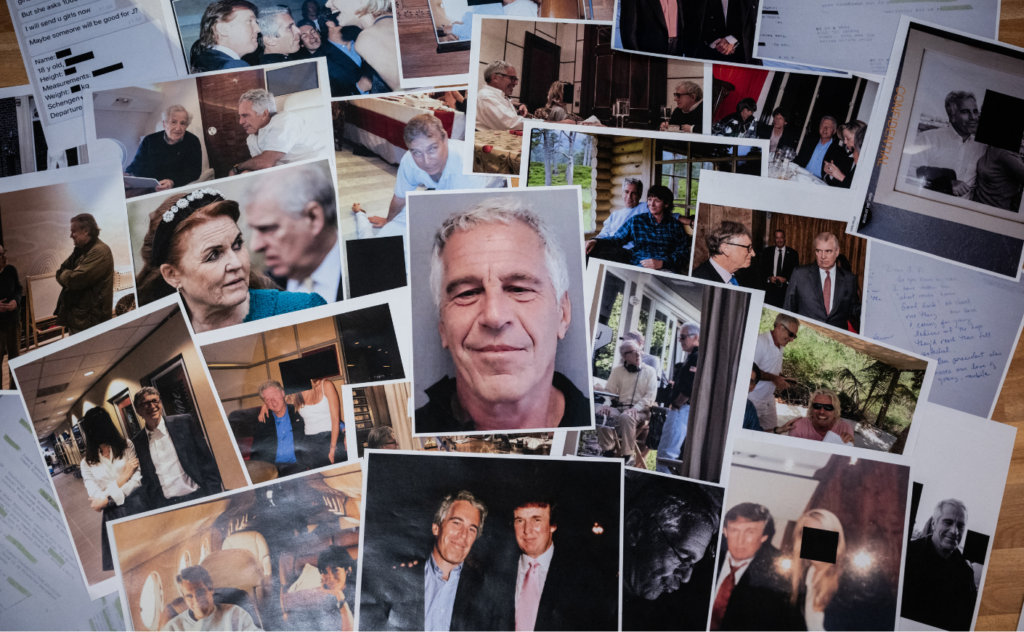
What followed his death was arguably more explosive than his life. Investigators, journalists, and survivors spent years demanding the release of documents detailing Epstein’s network. That network, it turned out, included some of the most powerful people on earth.
In January 2026, the US Department of Justice released over three million pages of files under the Epstein Files Transparency Act. Those documents set off a chain of events that led directly to Prince Andrew’s arrest.
The Epstein scandal isn’t just about one man. It’s about power, privilege, and a system that protected predators for decades.
The Arrest: What Actually Happened on February 19, 2026
Thames Valley Police announced it was assessing claims against Andrew Mountbatten-Windsor in early February 2026 about two weeks before the arrest. The trigger was a report filed by Graham Smith, chief executive of the anti-monarchy group Republic. Smith accused the former prince of suspected misconduct in public office and potential breaches of Britain’s Official Secrets Act.
Once police determined sufficient grounds existed, they moved. Fast.
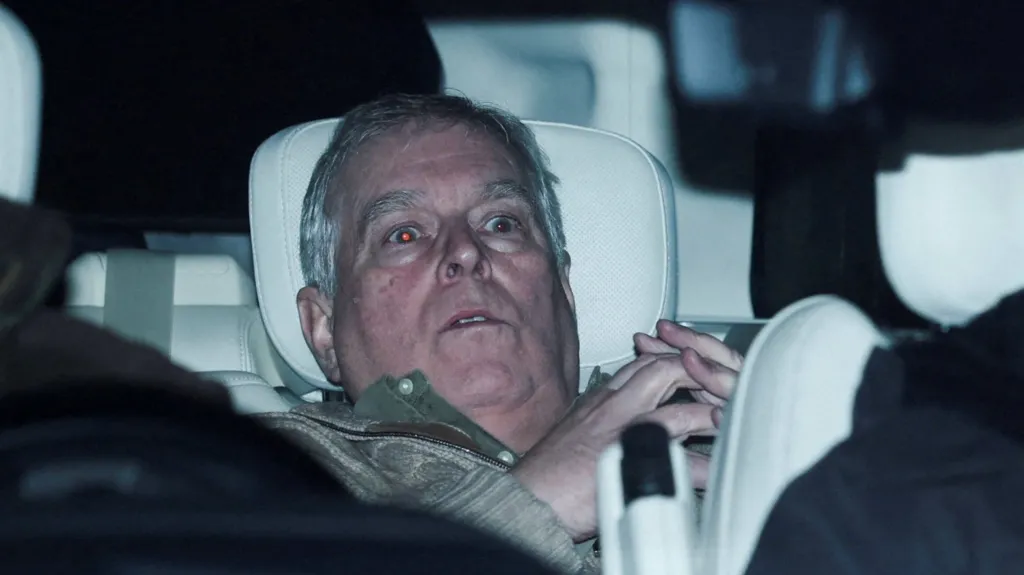
Andrew was arrested on his birthday. He was driven away from Aylsham Police Station in Norfolk looking, according to news photographers, visibly shaken. Eleven hours later, he walked free for now.
What Is Misconduct in Public Office?
Misconduct in public office is a common law offence in the UK. It applies to any public official who wilfully neglects their duty or abuses their position. The maximum sentence is life imprisonment.
Andrew served as UK Special Representative for International Trade and Investment from 2001 to 2011. That role came with a formal duty of confidentiality. According to the trade envoy terms of appointment published by the British Parliament in 2023, trade envoys must keep sensitive information confidential and the Official Secrets Act 1911 and 1989 apply explicitly.
The question police are now answering: did Andrew breach that duty when he forwarded confidential material to Jeffrey Epstein?
The Epstein Files: What the Documents Revealed
The January 2026 release of Epstein files was the largest yet. More than three million pages. The documents covered Epstein’s correspondence, financial dealings, travel logs, and contact lists. For Andrew Mountbatten-Windsor, several emails stood out immediately.
The Trade Envoy Emails
Newly released documents show that Andrew, while serving as UK trade envoy, forwarded confidential visit reports to Jeffrey Epstein. According to CNN (February 2026), one email sent to someone titled “The Duke” and then forwarded to Epstein read: “Please find attached the visit reports for Vietnam, Singapore, Hong Kong and Shenzhen in relation to your recent visit to South East Asia.”
In another email from December 2009, Andrew told Epstein he had spent a weekend in Paris with an “interesting American family Bank who are after some help in the Middle East.” Epstein replied the same evening asking which Middle East country Andrew was “strongest” in.
The implications are serious. Trade envoys aren’t civil servants, but their role carries a legally enforceable duty of confidentiality. Sharing sensitive trade intelligence with a convicted sex offender could constitute a clear breach.
The UK government confirmed in May 2026 that it found “no evidence that a formal due diligence or vetting process was undertaken” when Andrew was appointed trade envoy.
The “We Are in This Together” Email
In October 2025 months before the arrest British newspapers revealed another damning email. On February 28, 2011, Andrew emailed Epstein with the words: “We are in this together and will have to rise above it.”
This email was sent more than two months after Andrew publicly claimed he had severed all ties with Epstein. That contradiction directly undercut the story he told BBC journalist Emily Maitlis in his now-infamous 2019 Newsnight interview.
The Virginia Giuffre Connection
No account of this scandal is complete without Virginia Giuffre. She was one of Epstein’s most high-profile accusers and the woman at the centre of Andrew’s most serious allegations.
Giuffre, then 17 years old, claimed she was trafficked by Epstein and his associate Ghislaine Maxwell and forced to have sex with Andrew on at least three occasions in London in 2001, in New York, and on Epstein’s private island, Little Saint James, in the US Virgin Islands.
A photograph showing Andrew with his arm around Giuffre’s waist, with Maxwell in the background, became one of the most scrutinised images in British royal history. Andrew’s team repeatedly claimed the photo was fake. Among the Epstein files released in 2026 was a draft email from Maxwell herself confirming the photograph’s authenticity.
Andrew settled a civil lawsuit brought by Giuffre in February 2022. British media reported the settlement was approximately £16 million (~$16 million). He never admitted wrongdoing.
Virginia Giuffre died by suicide in 2025. Following Andrew’s arrest, her siblings released a statement: “At last, today, our broken hearts have been lifted at the news that no one is above the law, not even royalty.”
A Timeline of Andrew’s Fall from Grace
| Year | Event |
|---|---|
| 1999 | Andrew claims he first met Epstein through Ghislaine Maxwell |
| 2008 | Epstein convicted; Andrew distances himself — briefly |
| 2011 | Andrew resigns as UK trade envoy amid friendship criticism |
| November 2019 | Disastrous BBC Newsnight interview with Emily Maitlis |
| May 2020 | Andrew withdraws indefinitely from public royal duties |
| February 2022 | Settles civil lawsuit with Virginia Giuffre for ~£16 million |
| October 2025 | King Charles III strips Andrew of all royal titles and honours |
| January 2026 | US DOJ releases over 3 million Epstein files |
| February 9, 2026 | Thames Valley Police begins assessing misconduct claims |
| February 19, 2026 | Andrew arrested; held 11 hours; released under investigation |
| May 2026 | UK government releases confidential trade envoy documents |
How the Royal Family Responded
King Charles III issued a statement saying he had “learned with the deepest concern” about his brother’s arrest. He stressed that “the law must take its course” and gave police his “wholehearted support and co-operation.”
The Prince and Princess of Wales echoed the King’s statement. Buckingham Palace confirmed it had not been given prior warning of the arrest.
Other members of the royal family continued with public engagements the same day. A clear signal that the institution was choosing to keep its distance.
The arrest came just months after Charles stripped Andrew of every royal title Prince, Duke of York, His Royal Highness. He is now simply Andrew Mountbatten-Windsor, eighth in line to the throne.
Andrew’s biographer, Andrew Lownie, told NPR before the arrest: “It’s pretty much destroyed the institution. Prince William doesn’t want to inherit this problem.”
US President Donald Trump, speaking from Air Force One, called the arrest “very sad” and “a shame.” He added: “I’m the expert in a way, because I’ve been totally exonerated.”
What Happens Next?
As of June 2026, the Thames Valley Police investigation is ongoing. Officers confirmed they are “examining a number of aspects of alleged misconduct” and speaking to “a number of witnesses.”
Assistant Chief Constable Oliver Wright said in a statement: “Misconduct in public office is a crime that can take different forms, making this a complex investigation.”
If Andrew is eventually charged and convicted, he faces up to life in prison under UK law. That outcome remains uncertain. He has not been formally charged.
Meanwhile, Peter Mandelson the former UK ambassador to Washington was also arrested on similar misconduct charges in 2026 following revelations about his own ties to Epstein. The investigation has not stopped at one high-profile name.
The Epstein files keep producing consequences. The question is how far they reach.
FAQ
1. Why was Prince Andrew arrested in 2026?
Andrew Mountbatten-Windsor was arrested on February 19, 2026, on suspicion of misconduct in public office. The arrest followed the release of US DOJ documents suggesting he shared confidential trade reports with Jeffrey Epstein during his time as UK trade envoy.
2. Was Prince Andrew charged with a crime?
No. He was released after 11 hours “under investigation.” As of June 2026, no formal charges have been filed. He remains under active investigation by Thames Valley Police.
3. What is the maximum sentence for misconduct in public office in the UK?
Misconduct in public office carries a maximum sentence of life imprisonment in the United Kingdom. It applies to public officials who wilfully abuse or neglect their duties.
4. What did the Jeffrey Epstein files reveal about Prince Andrew?
Among other things, the files showed emails suggesting Andrew forwarded confidential government trade reports to Epstein in 2010. They also revealed an email from Ghislaine Maxwell appearing to confirm the authenticity of the famous photograph of her, Epstein, Andrew, and Virginia Giuffre.
5. Has King Charles supported the investigation?
Yes. King Charles III said he had learned of the arrest “with the deepest concern” and stated the law must take its course, offering police his “wholehearted support and co-operation.”
6. What happened to Virginia Giuffre?
Virginia Giuffre, one of the most prominent accusers in the Jeffrey Epstein case, died by suicide in 2025. Her family released a statement following Andrew’s arrest welcoming the development and saying “no one is above the law, not even royalty.”
The Law Has Finally Caught Up
The arrest of Andrew Mountbatten-Windsor marks a turning point. For years, critics argued that wealth, status, and proximity to power provided a kind of invisible shield. The February 2026 arrest — the first of a senior British royal in nearly four centuries — cracked that shield publicly.
The Jeffrey Epstein scandal did not end with Epstein’s death. If anything, the millions of documents released under the Epstein Files Transparency Act have expanded the circle of accountability. Andrew’s arrest is one chapter in a much longer story.
Whether he is ultimately charged remains to be seen. But the message is already written: royal privilege does not mean legal immunity. And the files are still being read.