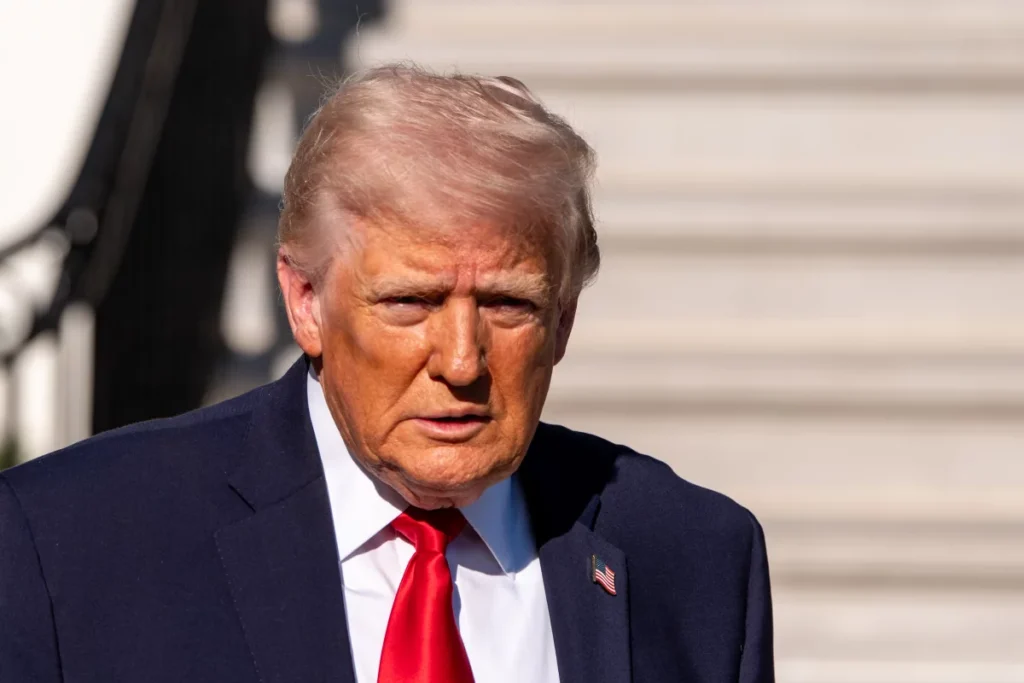
The judge didn’t hesitate.
A federal judge has dismissed Donald Trump’s $10 billion lawsuit against the Wall Street Journal a case built around the paper’s reporting on Trump’s connections to Jeffrey Epstein. The ruling is a decisive victory for press freedom and a significant legal embarrassment for a president who has made targeting the media a centerpiece of his political brand.
Ten billion dollars. Thrown out.
What Trump was alleging
Trump’s lawsuit claimed the Journal’s Epstein coverage was false, damaging, and part of a broader effort to destroy his reputation. It was one of the most aggressive legal moves ever made by a sitting or former US president against a major news organization a number designed not just to win in court, but to intimidate.
That strategy just failed publicly, on the record, in federal court.
What triggered the lawsuit
Trump filed the case in July, moving fast on a promise he’d made almost the moment the Journal’s story landed. The article had done something politically damaging it put a fresh, uncomfortable spotlight on Trump’s well-documented relationship with Epstein by publishing details of a sexually suggestive letter the paper said bore Trump’s signature.
The letter, reportedly included in a 2003 birthday album compiled for Epstein’s 50th birthday, wasn’t a leak or an allegation. It was a document. With a name on it.
Trump called it defamatory. The judge disagreed.
What the ruling actually means
To win a defamation case of this scale, Trump needed to show the Journal published the story knowing it was false or with reckless disregard for the truth. That’s the legal bar. And according to Judge Gayles, Trump’s legal team didn’t clear it.
This isn’t a close call dressed up in legal language. It’s a finding that the lawsuit, as filed, didn’t hold up to basic scrutiny.
The Wall Street Journal’s reporting stands. The letter is still on the record. And a $10 billion attempt to make both disappear just failed in federal court.
The amended complaint option keeps this case technically alive but it raises an immediate question. If Trump’s team couldn’t make the malice argument stick the first time, with every incentive in the world to get it right, what changes in round two?
For now, the Epstein story Trump wanted litigated into silence is louder than ever and a federal judge just made sure of it.
Congress Released the Letter. Trump Says He Didn’t Write It. A Judge Says That’s for a Jury to Decide.
The document is public. The denial is on record. And now, neither side gets to declare victory yet.
The letter at the center of Trump’s $10 billion defamation lawsuit against the Wall Street Journal didn’t stay buried for long. Congress subpoenaed records from Epstein’s estate and released the letter publicly. Trump’s response was swift and unequivocal: the story was “false, malicious, and defamatory.” He denied writing it entirely.
But Judge Darrin P. Gayles just ruled that who actually wrote that letter isn’t his call to make not yet.
What the judge actually decided
The Wall Street Journal’s legal team pushed for a clean win asking the court to rule outright that the article’s statements were true and therefore couldn’t be defamatory. The judge refused.
In his ruling, Gayles was precise: “Whether President Trump was the author of the Letter or Epstein’s friend are questions of fact that cannot be determined at this stage of the litigation.”
That’s not a vindication for Trump. It’s not a vindication for the Journal either. It’s the court saying the core dispute did Trump write it, and was he Epstein’s friend is still very much alive.
A pattern that’s getting harder to ignore
Monday’s ruling is the latest setback in what has become a broader, increasingly visible strategy using the legal system to silence reporting that reflects badly on the Trump administration.
The Epstein files release triggered a political firestorm the White House has struggled to contain. Lawsuits followed. Denials followed. And one by one, the attempts to manage the fallout have run into the same wall: facts already in the public domain, documents already in congressional hands, and courts unwilling to do the work that spin cannot.
The Wall Street Journal didn’t blink. Its spokesperson confirmed the organization was pleased with the ruling, standing fully behind the “reliability, rigor and accuracy” of its reporting.
The White House did not respond to a request for comment.
Where this goes from here
The case isn’t over. Trump’s team has been given the opportunity to file an amended complaint meaning the $10 billion lawsuit could return in a new form.
But the central problem hasn’t changed. The letter is public. Congress has it. And a federal judge has now confirmed that the question of whether Trump wrote it is serious enough to require a full legal reckoning not a quick dismissal in either direction.
That’s not the outcome the White House wanted. And it’s not the outcome that makes this story go away.