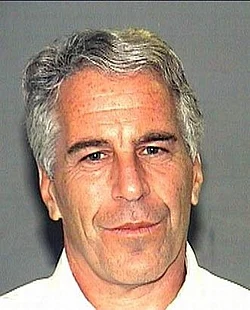
Jeffrey Edward Epstein (January 20, 1953 – August 10, 2019) was an American financier and convicted sex offender who became one of the most controversial figures in modern criminal history. He began his professional career as a teacher at the elite Dalton School in New York, despite not holding a college degree. After leaving the school in 1976, he transitioned into the banking and finance sector, working at Bear Stearns before establishing his own financial firm.
Epstein built an exclusive network of ultra-wealthy clients, offering specialized tax and estate management services to billionaires. Over time, he cultivated an elite social circle while amassing significant personal wealth. However, investigators later alleged that he operated a vast sexual exploitation network involving underage girls and young women, many of whom accused him — and in some cases his associates — of repeated sexual abuse.
In 2005, Epstein came under criminal investigation in Palm Beach, Florida, after a parent reported that he had sexually abused her 14-year-old daughter. Federal authorities later identified 36 victims, some as young as 14. In 2008, Epstein pleaded guilty in a Florida state court to procuring a minor for prostitution and soliciting prostitution. The plea deal, approved by federal prosecutors, resulted in a controversial sentence of 13 months in custody, much of which included work-release privileges.
On July 6, 2019, Epstein was arrested again — this time on federal charges of sex trafficking minors in Florida and New York. While awaiting trial, he died on August 10, 2019, in his jail cell. The New York City medical examiner ruled his death a suicide by hanging. However, the ruling was publicly disputed by forensic pathologist Michael Baden, contributing to widespread skepticism and numerous conspiracy theories.
In July 2025, the FBI released surveillance footage intended to support the suicide conclusion. Reports noted that nearly three minutes of footage were missing and that the video had been modified, further fueling public controversy.
Because Epstein died before trial, a judge formally dismissed all criminal charges against him on August 29, 2019.
Epstein had a decades-long association with Ghislaine Maxwell, who was later convicted in 2021 on federal charges of sex trafficking and conspiracy for recruiting underage girls for him.
Throughout his life, Epstein maintained connections with many high-profile figures — including politicians, royalty, business leaders, and academics. His associations with public figures such as Donald Trump, Prince Andrew, Bill Clinton, and others drew intense scrutiny following his arrest. Documents released under transparency initiatives — often referred to as the “Epstein Files” — further highlighted the breadth of his social and professional network.
Early life
Early Life and Education of Jeffrey Epstein
Jeffrey Edward Epstein was born on January 20, 1953, in Brooklyn, New York City. He was raised in a Jewish household by his parents, Pauline “Paula” Stolofsky and Seymour George Epstein, who had married the year before his birth. Pauline worked as a school aide and homemaker, while Seymour was employed by the New York City Department of Parks and Recreation as a groundskeeper and gardener.
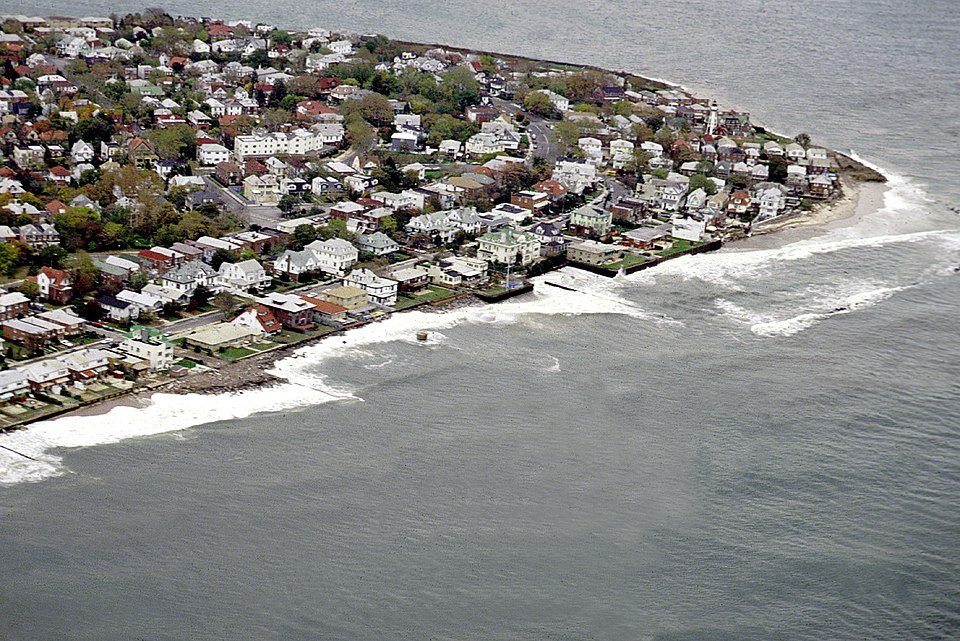
Epstein was the elder of two sons. He and his younger brother, Mark Epstein, grew up in Sea Gate — a private, gated community located in the Coney Island area of Brooklyn. Within the family, Jeffrey was nicknamed “Bear,” while his brother was called “Puggie.” Friends and neighbors often described their household as quiet and modest, with Epstein’s mother remembered as a caring homemaker.
For his education, Epstein attended local public schools, starting at Public School 188 and later Mark Twain Junior High School. He was known for excelling in mathematics and often earned extra money by tutoring fellow students. Classmates described him as intelligent, quiet, and somewhat nerdy, but also kind and generous. Some recalled his childhood nickname “Eppy,” noting he was an average boy who stood out academically, particularly in math.
In 1967, Epstein attended the National Music Camp at the Interlochen Center for the Arts. He had begun playing the piano at age five and was considered musically talented by peers.
He graduated from Lafayette High School in 1969 at just 16 years old after skipping two grades. That same year, he enrolled in advanced mathematics courses at Cooper Union. In 1971, he continued his studies at the Courant Institute of Mathematical Sciences at New York University, focusing on mathematical physiology. However, he left the program in June 1974 without completing a degree.
Career
Private School Teacher (1974–1976)
At just 21 years old, Jeffrey Epstein began his professional career as a physics and mathematics teacher at the prestigious Dalton School, a private institution on Manhattan’s Upper East Side, in September 1974. He was hired despite lacking a college degree or formal teaching credentials.
Donald Barr, who had served as Dalton’s headmaster until June 1974, was known for making several unconventional hiring decisions during his tenure. However, it remains unclear whether he played any direct role in Epstein’s recruitment. Epstein joined the faculty roughly three months after Barr’s departure.
During his time at Dalton, former students later alleged that Epstein displayed inappropriate behavior toward underage female students. Some claimed he gave certain girls excessive attention and was seen socializing in ways considered unprofessional — including reportedly attending a party where teenagers were drinking. Other students also recalled instances of him flirting with female pupils.
While teaching at Dalton, Epstein became acquainted with Alan “Ace” Greenberg, the chief executive officer of the Wall Street investment bank Bear Stearns, whose children attended the school. According to accounts, Epstein made a favorable impression during parent-teacher interactions, which helped him gain an introduction to Greenberg.
In June 1976, Epstein was dismissed from Dalton School, officially cited for “poor performance.” Shortly afterward, Greenberg offered him a position at Bear Stearns — a move that marked Epstein’s entry into the world of high finance and set the stage for his future career.
Bear Stearns Career (1976–1981)
Jeffrey Epstein entered the finance world in 1976 when he joined the Wall Street investment bank Bear Stearns as a junior assistant to a floor trader. Despite starting in a low-level role, he advanced rapidly within the firm.
Epstein soon became an options trader in Bear Stearns’ special products division — a unit that dealt with complex financial instruments and high-net-worth clients. His work involved advising some of the bank’s wealthiest customers on sophisticated tax mitigation strategies. Among those he reportedly served was Edgar Bronfman, president of Seagram.
Epstein gained a reputation inside the firm for his ability to handle elite clients and intricate financial products. James Cayne, who later became Bear Stearns’ CEO, publicly praised Epstein’s financial acumen and effectiveness with wealthy investors.
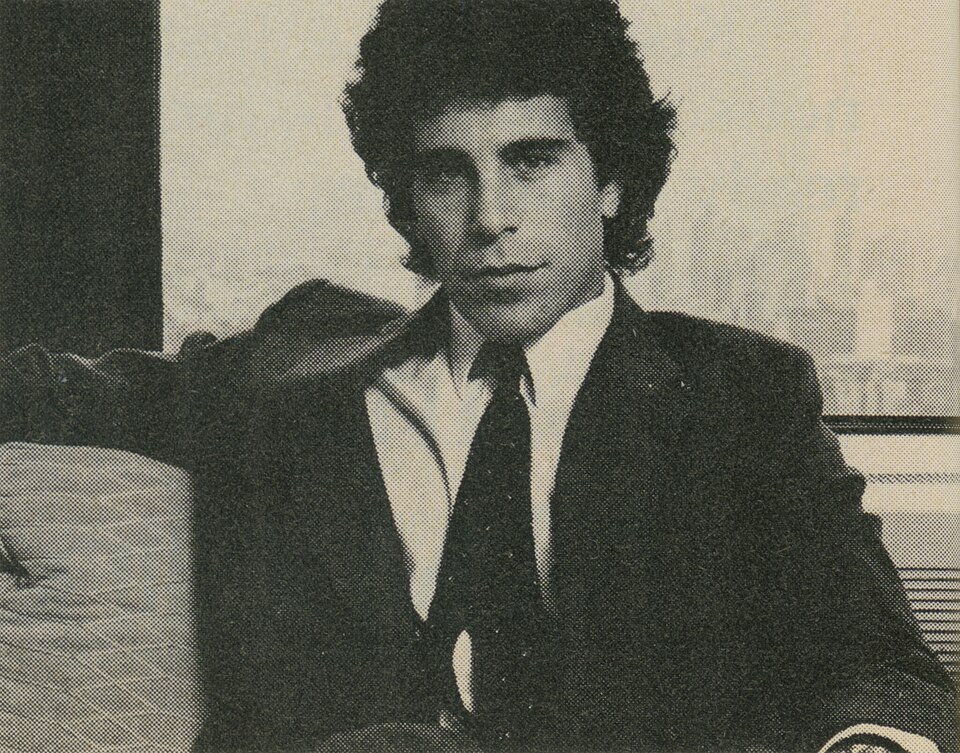
In July 1980, Epstein’s rising profile was reflected in popular culture when he was featured as Cosmopolitan magazine’s “Bachelor of the Month.”
That same year, he was promoted to limited partner — a significant achievement that underscored his rapid rise on Wall Street.
However, his tenure at Bear Stearns ended in 1981 when he was asked to leave the firm. According to sworn testimony, his departure was linked to a “Reg D violation,” referring to a regulatory issue involving securities rules.
Despite leaving the bank, Epstein maintained close relationships with senior executives, including Cayne and Alan Greenberg, and continued as a Bear Stearns client until the firm’s collapse in 2008.
Financial Troubleshooter (1981–1987)
In August 1981, after leaving Bear Stearns, Jeffrey Epstein launched his own consulting firm, Intercontinental Assets Group Inc. (IAG). The company specialized in helping clients recover money lost through fraud, embezzlement, or financial mismanagement.
Epstein often described himself during this period as a high-level “bounty hunter” for finances. According to associates, his work involved tracking down stolen funds for governments, corporations, and ultra-wealthy individuals. At times, he also reportedly worked with clients accused of embezzlement, helping manage or resolve complex financial disputes.
One notable client was Spanish actress and heiress Ana Obregón. In 1982, Epstein assisted her in recovering millions of dollars in investments that had vanished following the collapse of Drysdale Government Securities, a brokerage firm brought down by fraud.
Throughout the mid-1980s, Epstein traveled frequently between the United States, Europe, and the Middle East, expanding his network of global financial and political contacts. While in London, he met financier Steven Hoffenberg. Their introduction reportedly came through defense contractor Douglas Leese and former U.S. Attorney General John Mitchell.
Epstein’s activities and connections during this time later drew scrutiny. Some acquaintances recalled that he claimed to have intelligence ties, even suggesting he worked with government agencies — assertions that were never publicly confirmed.
Hoffenberg later stated that he introduced Epstein to media magnate Robert Maxwell, father of Ghislaine Maxwell, further linking Epstein to influential international circles.
Reports also surfaced that Epstein possessed an Austrian passport bearing his photograph but issued under a false name, listing Saudi Arabia as his residence. The circumstances surrounding the passport were never fully explained.
During this era, Epstein’s clientele reportedly included Saudi businessman Adnan Khashoggi, a major arms dealer known for his role as an intermediary in the Iran–Contra affair. Khashoggi was introduced to Epstein through Douglas Leese and was among several high-profile defense and intelligence-linked figures within Epstein’s expanding network.
Towers Financial Corporation (1987–1993)
In 1987, Jeffrey Epstein was hired by Steven Hoffenberg as a consultant for Towers Financial Corporation, a debt-collection company that purchased debts owed to banks, hospitals, and phone companies. Epstein was set up in offices at the Villard Houses in Manhattan and reportedly earned $25,000 per month for his consulting work (equivalent to about $69,000 in 2024).
Together, Hoffenberg and Epstein repositioned themselves as corporate raiders, using Towers Financial as their vehicle for high-profile business maneuvers. One of Epstein’s earliest assignments involved orchestrating an unsuccessful attempt to take over Pan American World Airways in 1987. A year later, they launched a similar failed bid to acquire Emery Air Freight Corp. Throughout this period, Epstein and Hoffenberg maintained a close working relationship, frequently traveling on Hoffenberg’s private jet.
Towers Financial’s collapse in 1993 revealed it as one of the largest Ponzi schemes in U.S. history, resulting in losses exceeding $450 million for investors (approximately $1 billion in 2024). Court documents indicated that Hoffenberg claimed Epstein had been intimately involved in aspects of the scheme. However, Epstein had left the company by 1989 and was never charged in connection with the fraud. Whether he personally benefited financially from Towers Financial’s operations remains unknown.
J. Epstein & Company (1988–2019)
In 1988, while still consulting for Steven Hoffenberg, Jeffrey Epstein founded his own financial management firm, J. Epstein & Company. Epstein claimed the firm was created to manage assets for clients with a net worth exceeding $1 billion, although the secrecy surrounding his clientele has led to skepticism.
The only publicly confirmed billionaire client was Leslie Wexner, chairman and CEO of L Brands (formerly The Limited, Inc.) and Victoria’s Secret. Epstein met Wexner in 1986 through mutual acquaintances, and by 1987, he had become Wexner’s financial adviser, quickly taking control of his complex financial affairs. In July 1991, Wexner granted Epstein full power of attorney, giving him authority to hire staff, sign checks, buy and sell properties, borrow money, and handle all legally binding transactions on Wexner’s behalf. Epstein managed Wexner’s wealth, oversaw the construction of his yacht, Limitless, and directed operations tied to Southern Air Transport and Victoria’s Secret. During this period, Epstein also used his influence as a talent scout to interact with models and young women, which later became linked to allegations of sexual exploitation.
By 1995, Epstein held several official roles in Wexner’s network, including director of the Wexner Foundation and Wexner Heritage Foundation, as well as president of Wexner’s property development company in New Albany, Ohio. Although he was never formally employed by L Brands, Epstein maintained close communication with company executives, often attending Victoria’s Secret fashion shows and hosting models at his New York City residence.
In 1996, Epstein renamed his firm the Financial Trust Company (FTC) and relocated it to St. Thomas, U.S. Virgin Islands, for tax advantages. This move allowed him to reduce federal income taxes by up to 90%, leveraging the islands as an offshore tax haven while remaining within the U.S. banking system. Epstein also maintained connections with major banks, including JP Morgan, and capitalized on relationships with executives such as Jes Staley. Epstein remained a client of JP Morgan until 2013, moving his accounts thereafter to Deutsche Bank’s U.S. affiliate.
By 2002, Epstein’s operations employed around 150 staff, including 20 accountants, across three sites: the Villard House in Manhattan, Wexner’s operation in Columbus, and St. Thomas.
Financially, Epstein’s businesses, including FTC and Southern Trust Company, reportedly generated over $800 million in revenue between 1999 and 2018. This included approximately $490 million in management fees — primarily from two billionaires, Leslie Wexner ($200 million) and Leon Black ($170 million) — and $310 million from investment returns. By exploiting U.S. Virgin Islands tax exemptions, Epstein’s companies reportedly saved $300 million, paying an effective tax rate of just 4%, despite a top federal marginal rate of 38.5%.
Epstein’s legal and financial network was extensive. Over his lifetime, he engaged at least 75 lawyers, including high-profile figures such as Alan Dershowitz, Kenneth Starr, Roy Black, and Jay Lefkowitz. U.S. Treasury Department records noted over 4,700 wire transfers totaling $1.1 billion through one account, alongside correspondence with Russian banks, some tied to his alleged sex trafficking activities. Forbes later reported that transfers across four major banks — JPMorgan Chase, Deutsche Bank, Bank of New York Mellon, and Bank of America — totaled more than $1.9 billion.

Liquid Funding and the Bear Stearns explosion (2000–2008)
Between 2000 and 2007, Jeffrey Epstein served as president of Liquid Funding Ltd., a Bermuda-incorporated financial company. Liquid Funding was an early innovator in the repurchase (repo) market, which allows lenders to provide cash to borrowers in exchange for securities that the borrower agrees to buy back at a set time and price. Unlike traditional repo transactions using stocks or bonds as collateral, Liquid Funding pioneered the use of bundled commercial and investment-grade residential mortgages as underlying securities.
Initially, Bear Stearns owned a 40% stake in Liquid Funding. With the help of credit rating agencies — including Standard & Poor’s, Moody’s, and Fitch — these complex securities received high AAA ratings, despite their inherent risks. The subsequent collapse of such mortgage-backed securities played a major role in Bear Stearns’ collapse in March 2008 and contributed to the 2008 financial crisis and the Great Recession. Had Liquid Funding held large amounts of these risky securities as collateral, it could have faced massive losses.
Epstein’s involvement with Bear Stearns intensified during the mid-2000s. In August 2006, shortly after federal authorities began investigating him for sexual misconduct, Epstein invested $57 million in the Bear Stearns High-Grade Structured Credit Strategies Enhanced Leverage hedge fund. SEC filings show that Epstein’s Financial Trust Company controlled voting rights over 10% of the fund.
By April 2007, an investor holding $57 million sought to redeem their investment. With the fund leveraged at 17:1, this redemption was equivalent to removing roughly $1 billion from the thinly traded collateralized debt obligations (CDO) market. The forced liquidation of assets triggered a repricing of CDOs, causing the fund to collapse three months later and contributing to Bear Stearns’ broader failure in March 2008. Investor losses across two Bear Stearns hedge funds exceeded $1.6 billion.
During the same period, Epstein was negotiating a plea deal with federal prosecutors in Florida concerning charges of sexual misconduct with minors. According to reports, U.S. Attorney Alexander Acosta facilitated a lenient deal after being instructed by higher government officials that Epstein was a person of importance. As part of the negotiations, Epstein reportedly provided “unspecified information” to prosecutors, though his actual cooperation in prosecuting the failed Bear Stearns hedge fund managers was disputed by his attorney Alan Dershowitz.
By April 2008, Moody’s reported that all outstanding rated liabilities of Liquid Funding were paid in full. The fund’s liquidation and sale to JP Morgan were still ongoing as of May 2008, finalizing Epstein’s financial involvement with the hedge fund.
Epstein & Zuckerman Ventures (2003–2004)
In 2003, Jeffrey Epstein collaborated with New York Daily News publisher Mortimer Zuckerman, advertising executive Donny Deutsch, and investor Nelson Peltz in an attempt to acquire New York Magazine. The group’s bid was ultimately unsuccessful, as investment banker Bruce Wasserstein purchased the publication for $55 million, over $10 million higher than the offer from Epstein and his partners.
The following year, in 2004, Epstein and Zuckerman invested up to $25 million to fund Radar, a celebrity and pop culture magazine founded by Maer Roshan. Epstein and Zuckerman were equal partners in the venture, while Roshan retained a small ownership stake as editor-in-chief. Despite the high-profile backing, Radar struggled in print and folded after just three issues, continuing only as an online publication.
D.B. Zwirn Special Opportunities Fund (2002–2008)
Between 2002 and 2005, Jeffrey Epstein invested $80 million in the D.B. Zwirn Special Opportunities Fund, a hedge fund specializing in illiquid debt securities. By November 2006, Epstein’s stake had grown to approximately $140 million. Concerned by reported accounting irregularities within the fund, he attempted to redeem his investment.
The fund refused to honor Epstein’s redemption request, citing typical hedge fund rules for illiquid investments, which often include multi-year lockup periods and require redemption notices 60 to 90 days in advance.
In 2008, the D.B. Zwirn fund was closed, and its remaining assets, including Epstein’s investment, were transferred to Fortress Investment Group after the firm purchased the fund’s holdings in 2009. Epstein subsequently pursued arbitration with Fortress regarding his redemption attempt, though the outcome of that process has not been publicly disclosed.
Other Business Ventures and Investments
Jeffrey Epstein was also involved in emerging technology and startup ventures. In 2014, he participated in funding rounds for crypto companies, including Coinbase and Blockstream, investing approximately $3 million in Coinbase and $500,000 in Blockstream. His investment in Coinbase was facilitated by Brock Pierce, co-founder of Tether, while the Blockstream investment was brokered by Joichi Ito, then director of MIT’s Media Lab.
Leaked emails revealed Epstein’s discussions with entrepreneur Shai Barak regarding meetings with Russian oligarch Viktor Vekselberg in June 2014. In April 2015, Epstein was asked for his opinion on Vekselberg-backed Fifth Dimension, a startup later shut down in 2018 following U.S. sanctions related to alleged election interference.
In addition to technology investments, Epstein claimed in a 2018 New York Times interview that he was advising Elon Musk on finding a new chairman for Tesla, following Musk’s public troubles with the SEC over his statements about privatizing the company.
Death of Jeffrey Epstein (2019)
Jeffrey Epstein, the American financier, convicted sex offender, and alleged human trafficker, died on August 10, 2019, while awaiting trial on federal sex trafficking charges at the Metropolitan Correctional Center (MCC) in New York City.
Prison guards reportedly found Epstein unresponsive in his jail cell at 6:30 a.m., hanging from his bed. After attempts at CPR, he was transported in cardiac arrest to New York Downtown Hospital, where he was pronounced dead at 6:39 a.m. The New York City medical examiner and the Department of Justice Inspector General ruled his death a suicide by hanging. Epstein’s lawyers challenged this conclusion, hiring forensic pathologist Michael Baden to conduct a private investigation.
Attorney General William Barr described the incident as a “perfect storm of screw-ups.” Investigations by the FBI and the Department of Justice Inspector General followed, and the guards on duty were later charged with multiple counts of record falsification. The circumstances led to widespread criticism of the Federal Bureau of Prisons, prompting calls for reform and the removal of the Bureau’s director.
Following Epstein’s death, all charges against him were dismissed, and attention shifted to his associates. Ghislaine Maxwell was arrested in July 2020 and later convicted on five sex trafficking-related counts in December 2021. Another associate, Jean-Luc Brunel, was arrested in France in 2020 and subsequently died by suicide.
Epstein’s death became the subject of widespread speculation and conspiracy theories, fueled by irregularities in jail procedures, the malfunction of two cameras outside his cell, and his claims of possessing compromising information about powerful figures. In November 2019, this led to the viral “Epstein didn’t kill himself” meme. Public opinion polls suggest a majority of Americans remain skeptical about the official account, with one survey showing only 16% believing Epstein died by suicide, 45% suspecting murder, and 39% unsure.