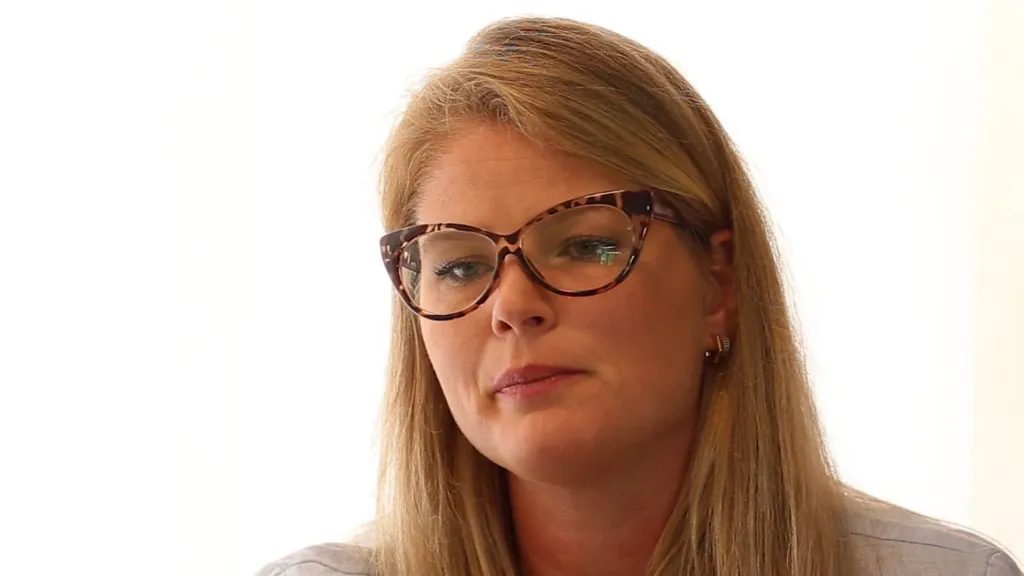
In 2004, a 16-year-old girl living in the Brazilian countryside says she was just starting her modeling career when Jean-Luc Brunel visited her family home. According to her account, Brunel tried to convince her mother to allow her to attend a modeling contest in Ecuador.
Brunel later died in prison while facing accusations of rape, sexual assault, and recruiting girls for Jeffrey Epstein. At the time of the visit, the family says they did not know who Brunel was. They had been introduced to him by a well-known Brazilian modeling scout.
An investigation by BBC News Brasil found evidence that Brunel used modeling agencies connected to him to search for young women and girls in South America. The investigation suggests the agencies helped arrange visas so the women could travel to the United States, where Epstein was based.
Another Brazilian woman told the BBC she had a relationship with Epstein. She showed reporters her U.S. visa, which listed one of Brunel’s agencies as her sponsor. However, she said she never worked as a model for the agency and that the documents were arranged only so she could travel to visit Epstein.

Gláucia’s mother was suspicious of Brunel, but he seemed “very charming” and eventually she agreed her daughter could go to Ecuador without her. The teenager travelled with Brunel’s team to Guayaquil for the Models New Generation competition. At the time, local newspapers reported that the participants were between 15 and 19 years old.
Gláucia says the competition passed without any major problems, although she grew suspicious when she was not allowed to contact her family.
Another contestant, from Western Europe, who was 16 at the time, remembers how Brunel’s behaviour struck her as odd. She asked not to be named, so we are referring to her as Laura.
“It was weird how he behaved and was always hanging out with the young Brazilian girls… He was behaving like a clown and only hanging out with quite young girls,” she says.
Laura believes that while the competition was “legit” and well organised, “he knew exactly which girls were vulnerable”.
“He seemed to control their finances,” she says. “The girls from Brazil and East European countries seemed to be the prime target.”
Gláucia says that towards the end of the trip, Brunel offered to fly her to New York “to take part in shows” with all expenses paid. At that point they had to contact her mother, Barbara, for permission.
Brazilian Model Says Her Mother Protected Her From Epstein Network
When asked if she would allow her daughter to continue modeling, Barbara gave a clear answer: “No. Not a chance.”
“They were only looking for children, minors,” she said. “Unfortunately they found my daughter.”
Barbara immediately stopped her daughter, Gláucia, from taking part in any more modeling activities and cut all contact with the network connected to Jean-Luc Brunel.
“It really was a narrow escape,” Gláucia later said.
Documents released by the United States Department of Justice show that Jeffrey Epstein was in Guayaquil on August 24 and 25, 2004, at the same time as the final of the modeling competition. Records also indicate that at least one model under the age of 16 who attended the event flew on Epstein’s private plane twice that same year.
Looking back, Gláucia said she did not realize what was happening at the time. “Without knowing it, I was in the middle of that storm,” she said.
“My mother saved me.”

Another Brazilian woman, whom we are calling Ana to protect her identity, says that Brunel and his modelling business were instrumental in facilitating her relationship with Epstein.
Ana was initially recruited by a Brazilian woman in the early 2000s in São Paulo.
Ana’s account, corroborated by documents reviewed by the BBC and cross-checked against US Department of Justice records, shows how Brunel helped to arrange US visas for Brazilians.
Ana says she left her hometown in southern Brazil after being promised modelling opportunities in São Paulo by a woman who was based there.
She says that on arrival, the woman took her documents and told her she now owed money for travel and photos. Ana says she soon realised there was no modelling work.
“She was a madam. Before I knew it, she was pimping me out.”
One of the clients was Jeffrey Epstein, says Ana.
She describes how, a few weeks after her 18th birthday, the woman took her to the home of a prominent businessman in São Paulo. There, she says, she heard him describe Epstein as “the king of the world” and say: “He likes younger girls.”
A few days later, she says she and two other women were sent to a luxury hotel in São Paulo, where Epstein would choose one of them. “He chose me,” she says.

Ana says she went to a room with Epstein, where he asked her to remove her clothes. “His thing was watching me while he touched himself. It was disgusting, but of all evils, the lesser one,” she says.
US Department of Justice files, including emails and flight records, place Epstein in Brazil at that time.
She says he invited her to a party in the city a few days later, which is where she first met Brunel, and the modelling agent soon became instrumental in arranging a US visa for her.
She adds that during the party, Epstein told her that he was going to Paris the next day and that he had already arranged for her to go with him.
The visa route
Describing the trip to France, she says: “He [Epstein] would give me $300 (£225). I would go out for a walk and give him the change, but he would tell me to keep the money. He would test me and leave money in my room, and then I would give it back to him, and he would say I could keep it.”
She says Epstein then told her that he had arranged for Brunel to hire her at his modelling agency in New York, and that the madam had handed over her documents.
Ana showed the BBC her passport, containing a US business visa with an annotation naming the agency that Brunel set up in the US, Karin Models of America.
Ana says she never worked for Karin Models of America but was told the paperwork would support her travel to the US, and the only reason for the visa was to visit Epstein.
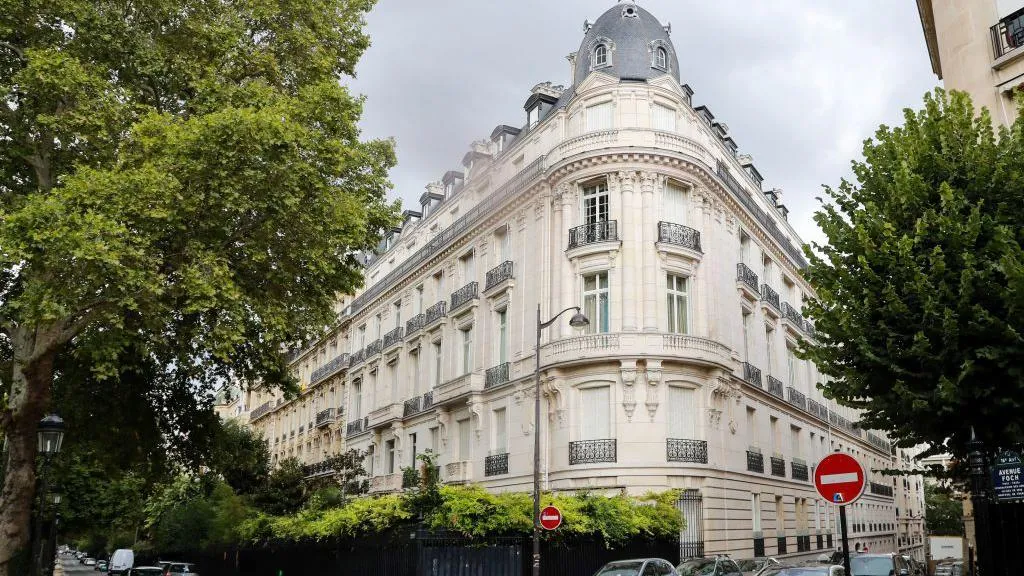
Investigation into recruitment network
Brazil’s Federal Public Prosecutor’s Office (MPF) opened an investigation in February into whether there was a recruitment network in Brazil linked to Epstein.
Federal prosecutor Cinthia Gabriela Borges from the national anti-trafficking unit told the BBC that she wanted to speak to women who had contact with Epstein to work out how the system operated. The women themselves are not the target of the inquiry.
What happened to Ana and others could be considered human trafficking for sexual exploitation, according to labour inspector and researcher Maurício Krepsky. He says that this type of crime may not be subject to a statute of limitations, so Brazilians involved could still be held accountable.
Gláucia is grateful that she had a mother who said no. And after years of trying to make sense of what happened to her, Ana feels fortunate to have left Epstein’s circle and rebuilt her life.